The BBQ Secret Alabama Has Been Keeping Since the 1920s — and Why It's Worth a Road Trip to Find It
The BBQ Secret Alabama Has Been Keeping Since the 1920s — and Why It's Worth a Road Trip to Find It
Ask most Americans to name the great barbecue states and you'll get a pretty predictable list. Texas, obviously. Kansas City, Missouri. The Carolinas. Memphis. Maybe a nod to Kentucky if someone's feeling adventurous. Alabama almost never comes up. And that's a genuine shame — because tucked into the northern part of the state, along the Tennessee Valley, there's a barbecue tradition so distinct and so delicious that food historians who encounter it for the first time tend to react with something close to disbelief.
The secret is a white sauce. And it changes everything.
The Man Who Invented It in His Backyard
The story starts in 1925, in Decatur, Alabama, with a railroad worker named Robert Gibson — known to everyone in town as Big Bob. Gibson was the kind of man who cooked the way some people breathe: constantly, generously, and with a competitive instinct that bordered on obsessive. He built a long, custom pit in his backyard and started hosting neighborhood barbecues that drew crowds large enough to suggest he'd stumbled onto something worth pursuing seriously.
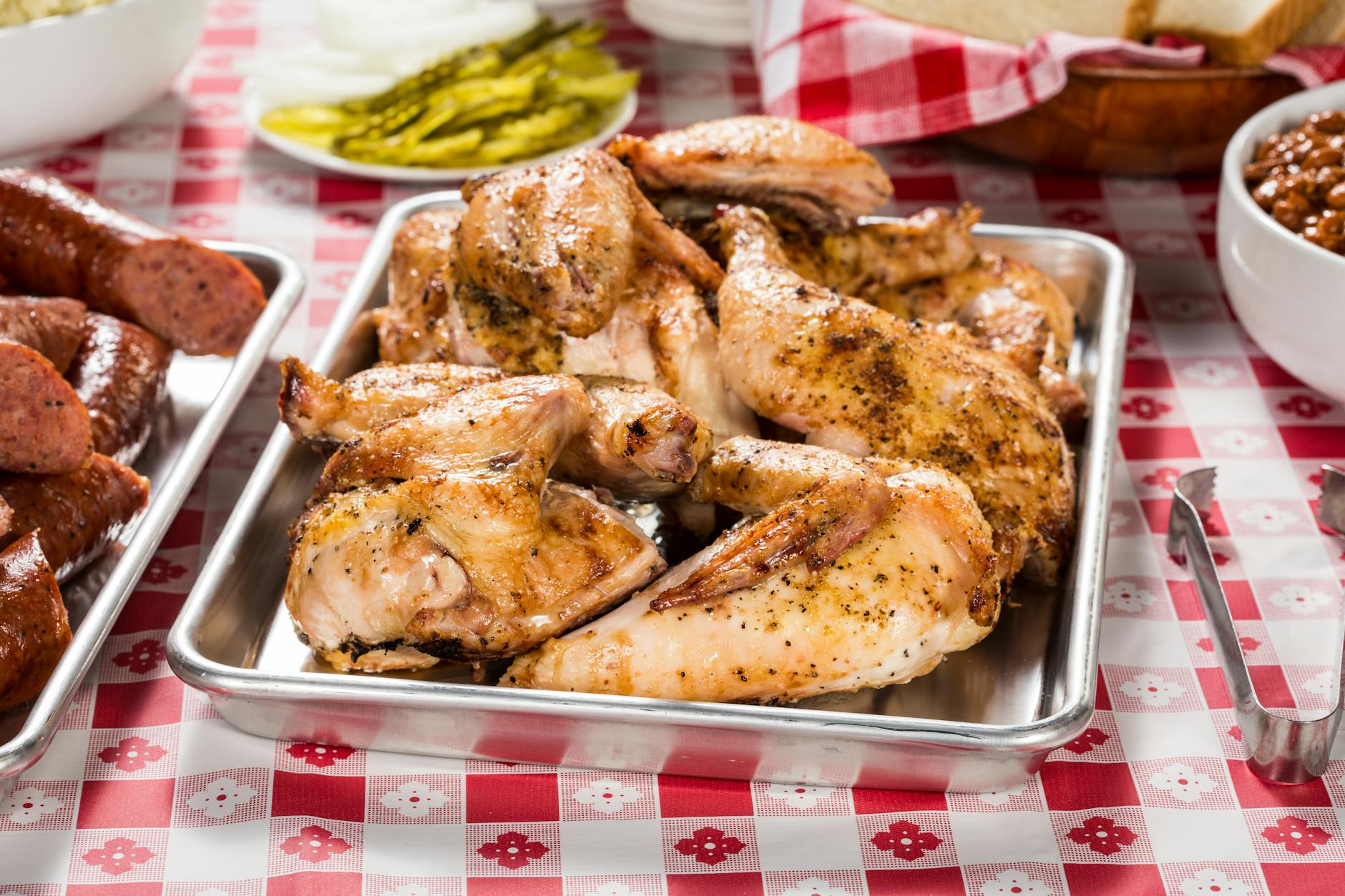
By 1925, those backyard sessions had become Big Bob Gibson's Bar-B-Q, one of the first dedicated barbecue restaurants in the state of Alabama. The chicken was the centerpiece — slow-smoked over hickory until the meat was falling-off-the-bone tender — but what made it genuinely unlike anything else in American barbecue was what happened next.
Gibson would pull the chicken directly from the pit and dunk it, whole, into a large vat of sauce. Not a red sauce. Not a tomato-based glaze. A thin, tangy, creamy white sauce built on a mayonnaise and apple cider vinegar base, seasoned with black pepper, a touch of horseradish, and a few other ingredients that various family members have kept deliberately vague over the decades. The sauce coated every surface of the chicken, soaked into the cracks in the skin, and created a flavor combination that was simultaneously rich and bright, smoky and acidic, unlike anything else in American food.
People drove from neighboring counties to eat it. Then neighboring states. And then, somehow, it mostly stayed a local secret.
Why It Never Spread the Way Other Styles Did
This is the part of the story that food historians find genuinely puzzling. Texas-style brisket spread because Texas is Texas — big, loud, and relentlessly good at marketing itself. Kansas City style got a boost from the competition circuit and a handful of charismatic ambassadors who brought it to national food media. Memphis ribs ended up on menus from coast to coast partly because the city had a music scene that attracted national attention and brought food writers along with it.
Alabama white sauce had none of those advantages. Decatur is a small city. Northern Alabama doesn't have a particularly strong food media presence. And mayonnaise-based barbecue sauce is, frankly, a harder sell to people who've never tasted it — it sounds wrong before you try it, which is a real marketing obstacle.
There's also something genuinely regional about the flavor profile that may have worked against its spread. The vinegar-forward, tangy brightness of white sauce is an acquired taste in the best possible sense — it rewards attention and repeat exposure. In a food culture increasingly shaped by immediate, uncomplicated flavor hits, a sauce that takes a second to understand is at a structural disadvantage.
So it stayed. Quietly exceptional, deeply local, and almost completely off the radar of the national food conversation.
What Makes It Actually Special
Let's be specific about why this matters, because "regional barbecue tradition" can sound like a polite way of saying "fine but not remarkable." Alabama white sauce is remarkable. Here's why.
First, the acidity. Apple cider vinegar in a barbecue sauce isn't new, but using it as the primary flavor driver — balanced against fat from the mayonnaise rather than sugar from tomato — creates a completely different experience than any red sauce. It cuts through the richness of smoked chicken the way a great lemon butter cuts through a piece of fish. It makes the smoke taste smokier. It makes the meat taste more like itself.
Second, the application method. Dunking the whole bird into the sauce immediately after it comes off the pit means the sauce isn't just a condiment — it's integrated into the experience of the meat at the moment when the surface is hottest and most porous. This isn't how most American barbecue works, and the result is categorically different from sauce served on the side.
Third, and maybe most importantly: it's just chicken. Not brisket, not ribs, not a twelve-hour pork shoulder. Chicken, done so well that it becomes the star. In a genre where poultry is often treated as the consolation prize for people who don't eat red meat, Alabama white sauce barbecue makes chicken the main event. That alone deserves recognition.
How to Experience It Yourself
Big Bob Gibson's is still operating in Decatur, now run by multiple generations of the Gibson and McLemore families. Pitmaster Chris Lilly — who married into the family and became one of the most decorated competition barbecue cooks in the country — has helped bring the restaurant's techniques to a slightly wider audience through a cookbook and competition circuit appearances. But the experience of eating it there, in northern Alabama, remains something distinct.
If a road trip isn't immediately in the cards, white sauce has become available commercially through a few specialty retailers and the restaurant's own online store. It's also genuinely easy to approximate at home: mayonnaise, apple cider vinegar, black pepper, a pinch of cayenne, and a little prepared horseradish. Mix it, taste it, adjust it, and then pour it over the best smoked chicken you can make.
You'll understand immediately why this stayed a secret for so long. And you'll probably be a little annoyed that nobody told you sooner.