The Lost Art of Year-Round Ham: How Appalachian Smokehouses Preserved Meat Without Refrigeration
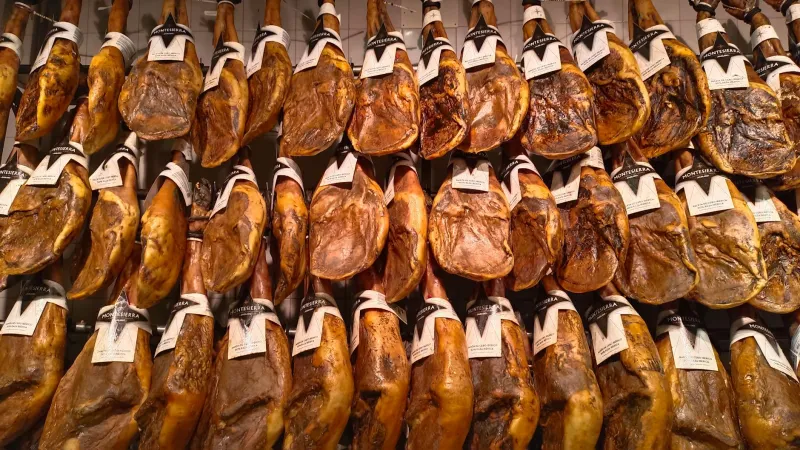
Walk into any upscale restaurant today and you'll find charcuterie boards loaded with prosciutto, jamón ibérico, and other imported cured meats commanding premium prices. But tucked away in the mountains of Virginia, North Carolina, and eastern Kentucky, a handful of families are still practicing a ham-curing technique that predates all of those European traditions — and produces flavors that might just surpass them.
 Photo: eastern Kentucky, via 3.bp.blogspot.com
 Photo: North Carolina, via cdn.shopify.com
This isn't the mass-produced "country ham" you find in grocery stores. This is something much older, more complex, and infinitely more interesting. It's a preservation method that could keep a ham perfectly edible for 18 months without any refrigeration, using nothing more than salt, smoke, and an understanding of mountain weather patterns that took generations to perfect.
The Three-Season System
The traditional Appalachian ham cure wasn't a single process — it was a carefully orchestrated dance with the seasons that began in late fall and didn't finish until the following summer. The timing was everything, because mountain families had exactly one chance per year to get it right.
It started with the first hard freeze, usually in December. That's when families would slaughter their hogs and begin the initial salt cure. But here's where it gets interesting: they didn't just pack the hams in salt and wait. The curing happened in three distinct phases, each one timed to take advantage of specific weather conditions that only occurred in Appalachian winters.
First came the "green cure" — fresh hams packed in a mixture of salt, brown sugar, and sometimes saltpeter, stored in the coldest part of the smokehouse for exactly 40 days. The sugar wasn't for sweetness; it was food for beneficial bacteria that would begin breaking down proteins and developing flavor compounds.
The Smoke That Made the Difference
After the salt cure came the smoking phase, and this is where most modern attempts at traditional ham fall short. The old-timers didn't just hang hams in a smoky room and call it done. They used a specific combination of woods — usually hickory as the base, with apple or cherry for sweetness, and sometimes a touch of oak for tannins.
But the real secret was the temperature control. These weren't hot-smoking operations. The fires were kept deliberately low and steady, never letting the smokehouse temperature rise above 80°F. This cold-smoking process could last anywhere from two to four weeks, depending on the size of the ham and the weather.
The goal wasn't to cook the meat — it was to create a protective barrier on the outside while slowly infusing smoke flavor throughout. Done right, this process would form a hard, almost leather-like exterior that sealed in moisture while keeping out insects and bacteria.
The Aging Game
Here's where the technique gets really sophisticated. After smoking, the hams entered their final phase: aging. But this wasn't passive storage. Mountain families understood that their hams needed to "breathe" through seasonal temperature changes to develop their full flavor potential.
The hams were hung in the upper reaches of the smokehouse, where they would experience the gradual warming of spring, the heat of summer, and the cooling of fall. This temperature cycling caused the fat to slowly render and redistribute, while enzymes continued breaking down proteins into increasingly complex flavor compounds.
The best hams were aged for at least a full year, sometimes two. By the end of this process, they had developed a deep, nutty complexity that modern accelerated curing methods simply can't replicate. The meat had a firm, almost jerky-like texture on the outside, yielding to tender, intensely flavored layers as you worked toward the center.
Why It Almost Disappeared
This technique survived for over two centuries, passed down through families who treated their smokehouse knowledge like trade secrets. But several factors nearly killed it off entirely.
First came refrigeration. Why spend 18 months curing a ham when you could keep fresh meat cold indefinitely? Then came food safety regulations that made traditional curing methods difficult to practice commercially. Finally, urbanization pulled younger generations away from rural communities where this knowledge lived.
By the 1970s, maybe a few dozen families across the entire Appalachian region were still practicing traditional ham curing. The technique was on the verge of becoming a lost art.
The Quiet Revival
But something interesting has happened over the past decade. As food culture has become more interested in authenticity and traditional techniques, a small but dedicated group of producers has begun reviving these old methods.
They're not trying to compete with industrial ham production. Instead, they're targeting the same market that pays premium prices for imported charcuterie — food lovers who understand that some flavors can't be rushed or mass-produced.
These modern practitioners are discovering that the old-timers knew something about meat curing that industrial food production forgot: time and patience create flavors that technology can't replicate.
Tasting History
If you're lucky enough to try an authentically cured Appalachian ham, the first thing you'll notice is the intensity. This isn't the salty, one-dimensional flavor of most commercial country hams. Instead, you get layers of flavor that reveal themselves slowly — smoke, salt, sweetness, and an almost wine-like complexity that comes from long aging.
The texture is equally distinctive. The exterior requires a sharp knife and some patience, but the interior meat slices into paper-thin pieces that melt on your tongue, releasing flavors that build and evolve as you chew.
Preserving More Than Meat
What makes this revival particularly meaningful is that it's preserving more than just a food preparation technique. It's maintaining a connection to a time when families had to understand their environment intimately — when knowing the difference between a true hard freeze and a temporary cold snap could mean the difference between having protein for the winter or going hungry.
In our age of industrial food production and global supply chains, there's something profound about a preservation method that requires you to pay attention to seasons, weather patterns, and the slow passage of time. It's a reminder that some of the best things we eat can't be hurried, mass-produced, or improved by modern technology.
They can only be made the way they've always been made: one ham, one season, one generation of knowledge at a time.