The Bowl That Built a Movement: How Black-Owned Lunch Counters Fed the Soul of Civil Rights
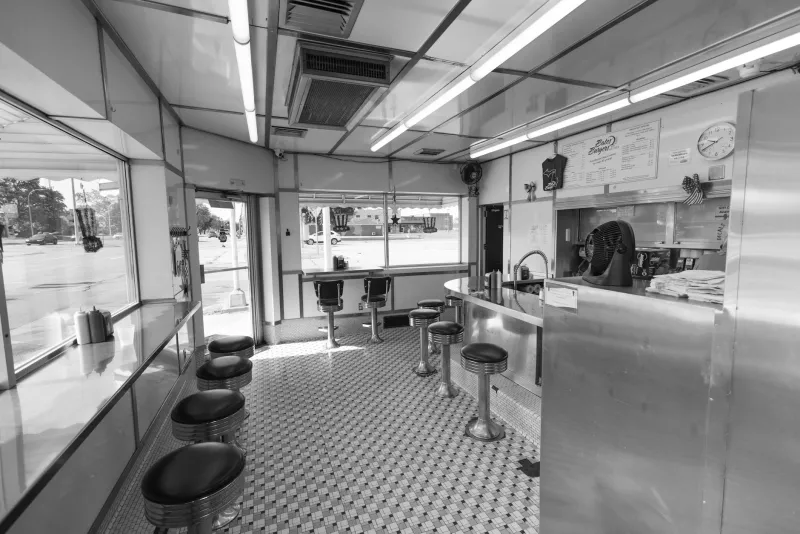
The Bowl That Built a Movement: How Black-Owned Lunch Counters Fed the Soul of Civil Rights
Everybody knows about the Greensboro sit-ins. Four Black college students. A Woolworth's lunch counter. February 1, 1960. It's one of the most photographed moments of the Civil Rights Movement, and rightfully so. But here's the part of the story that almost nobody tells: the meal those students had eaten before they walked through that door — and the network of Black-owned kitchens that had been feeding people like them, quietly and defiantly, for decades before the cameras showed up.
The lunch counter wasn't just a symbol. It was an infrastructure. And long before integration became the legal law of the land, Black communities had built their own version of it — one bowl of field peas, one plate of stewed greens, one pot of slow-cooked neck bones at a time.
The Dish Nobody Photographed
Across the Jim Crow South, Black-owned lunch counters, church kitchens, and "race restaurants" — a term used at the time without irony — served a rotating cast of humble, deeply nourishing dishes that kept working people on their feet. Hoppin' John was a staple: black-eyed peas cooked down with rice and a smoked ham hock, filling enough to last a long shift and cheap enough to feed a crowd. Pot likker soup — the brothy, nutrient-dense liquid left behind after cooking collard greens — was ladled out in mugs and considered medicinal by the cooks who made it.
These weren't dishes born from scarcity alone. They were dishes refined through generations of resourcefulness. The women (and it was almost always women) running these kitchens had learned how to extract maximum sustenance from minimum ingredients, and they had turned that skill into something close to an art form.
Cooks like Georgia Gilmore in Montgomery, Alabama, understood this intuitively. After Rosa Parks was arrested in 1955, Gilmore organized what she called the "Club from Nowhere" — a rotating group of women who cooked food at home and sold it to raise money for the Montgomery Bus Boycott. Pies, cakes, fried chicken, plates of beans and rice. She fed movement leaders out of her own kitchen and bankrolled organizing efforts through sheer culinary output. Martin Luther King Jr. was reportedly a regular at her table. She never made a history textbook.
More Than Sustenance
What made these spaces so significant wasn't just the food — it was what the food allowed to happen around it. A lunch counter where you were welcomed, where the cook knew your name, where you could sit down and eat without humiliation, was also a place where people could talk. Plan. Organize. Breathe.
Historian Jessica B. Harris, one of the foremost scholars of African American foodways, has written extensively about how the act of feeding one another within the community was itself a political act under segregation. When the state and the broader white economy refused to recognize your humanity, sitting down to a proper meal prepared with care by someone who saw you — fully, completely — was a form of resistance that didn't require a protest sign.
The dishes themselves often carried that weight. Slow-cooked beans and greens weren't just economical. They were connective tissue between generations, between the rural South and the urban migration north, between slavery-era survival cooking and something that could be reclaimed as culture and pride. Serving them was a statement, even when no statement was intended.
The Cooks Who Never Got Credit
For every Georgia Gilmore, there were dozens of unnamed women running church fellowship halls and small lunch counters who fed civil rights workers passing through town, offered a back booth to organizers who needed somewhere to meet, and kept the lights on in their communities through food sales and catering. The Student Nonviolent Coordinating Committee (SNCC) famously relied on local Black women's networks for housing and meals as they traveled through the Deep South registering voters in the early 1960s. Without those kitchen networks, the logistics of the movement would have looked very different.
Many of these women were also taking real risks. Feeding known activists in certain parts of the South could invite retaliation — from employers, from local authorities, from white neighbors. The kitchen wasn't always a safe space. It was just the space they had, and they used it.
Why This Matters Now
There's been a genuine and welcome wave of attention toward Black foodways in American culture over the past decade — from the work of chefs like Marcus Samuelsson and Michael Twitty to the broader conversation about who gets credit for Southern cuisine. But the political dimension of that food history still tends to get softened in the retelling. The focus lands on flavor and heritage, which is real and important, but the story of the lunch counter kitchen as a node in a resistance network is something different.
It's a reminder that food has always been infrastructure. That whoever controls the feeding of a community holds a particular kind of power. And that some of the most consequential political organizing in American history happened not in meeting halls or on courthouse steps, but around tables where someone had spent all morning making sure there was enough for everyone.
The next time you sit down to a bowl of hoppin' John or reach for a mug of pot likker on a cold afternoon, you're touching something with a longer and more complicated history than most recipe cards let on. That's the rare dish hiding right there in the open.