The Haystack Method: How a Wisconsin Farm Town Accidentally Revolutionized Fine Dining
Chef Antoine Dubois had just spent $80,000 renovating his Chicago restaurant's kitchen when he stumbled across a YouTube video that changed everything. Shot on a shaky phone camera in what appeared to be someone's backyard, it showed an elderly Wisconsin farmer demonstrating a cooking technique that Dubois had never seen in any culinary school.
Six months later, that same technique was being featured in Food & Wine magazine as "the most innovative slow-cooking method to emerge in decades." The farmer, meanwhile, was still scratching his head about why city folks were making such a big deal about something his family had been doing since the 1890s.
Welcome to the strange journey of the "haystack method" — a cooking technique born from Midwest practicality that's now showing up in some of America's most expensive restaurants.
When Necessity Meets Innovation
The story begins in Millerville, Wisconsin, population 847, where winter temperatures regularly drop below zero and the growing season ends abruptly in October. For farming families in the late 1800s, this created a specific problem: how do you slow-cook tough cuts of meat when fuel is expensive and you need your kitchen stove for other things?
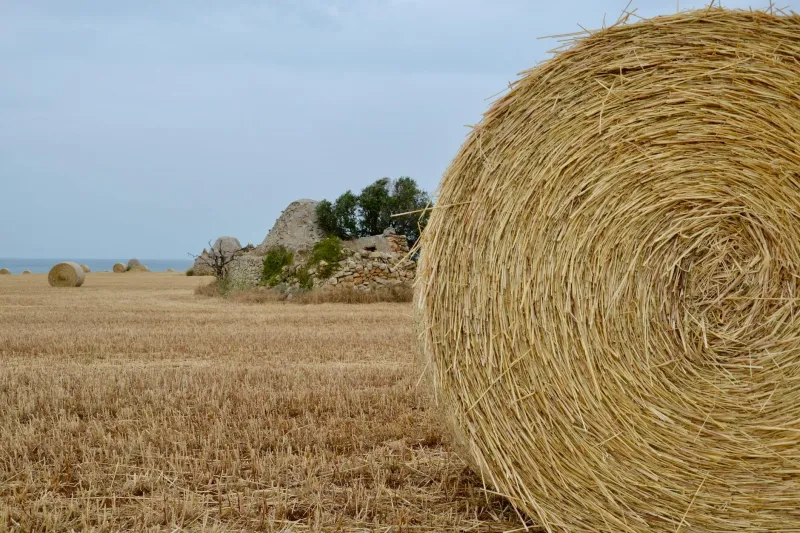
The solution came from an unexpected source. Local farmers noticed that hay bales, when properly constructed, generated significant heat through the natural decomposition process. Someone — nobody remembers exactly who — had the brilliant idea to bury cast iron pots deep inside these bales, essentially creating outdoor slow cookers that maintained steady, low temperatures for 12 to 16 hours.
"My great-grandfather started doing this because coal was expensive and he needed the kitchen stove to heat the house," explains Robert Kowalski, a third-generation farmer whose family still uses the technique. "He figured out that if you built the haystack right and buried the pot at exactly the right spot, you could cook a tough piece of beef until it fell apart."
The Science Behind the Stack
What those early farmers stumbled upon, without realizing it, was a nearly perfect slow-cooking environment. Fresh hay bales generate heat through microbial decomposition, typically reaching internal temperatures between 130-160°F — exactly the range modern sous vide cooking aims for. The thick hay provides incredible insulation, maintaining steady temperatures for hours longer than most conventional cooking methods.
Dr. Sarah Chen, a food science professor at the University of Wisconsin-Madison, has studied the haystack method extensively. "It's actually quite sophisticated," she explains. "The farmers developed precise techniques for hay moisture content, pot placement, and timing that create ideal conditions for breaking down tough connective tissues while preserving moisture."
The method works best with tough, collagen-rich cuts — exactly the kind of inexpensive meat that farming families needed to make palatable. Chuck roasts, pork shoulders, and whole chickens emerge from their hay cocoons incredibly tender, with a unique flavor profile that Chen describes as "earthy and complex, unlike anything achieved through conventional cooking."
From Farm to Fine Dining
The technique might have remained a local curiosity forever if not for Marcus Thompson, a Chicago-based food blogger who was visiting his girlfriend's family farm in Millerville three years ago. When her grandfather demonstrated the haystack method for Sunday dinner, Thompson was stunned by the results.
"I've eaten at some of the best restaurants in the world," Thompson says. "But that pot roast was unlike anything I'd ever tasted. The texture was perfect, and there was this subtle, smoky flavor that I couldn't identify."
Thompson's blog post about the experience went viral, catching the attention of several prominent chefs. Within months, restaurants in Chicago, New York, and Los Angeles were experimenting with their own versions of haystack cooking.
Chef Dubois was one of the first to embrace the technique professionally. "When I saw that video, I knew immediately that this was something special," he recalls. "The level of temperature control and the unique flavor development — it's exactly what we're trying to achieve with modern cooking techniques, but it was invented by farmers over a century ago."
Lost in Translation
Of course, adapting a farming technique to urban restaurant kitchens required some creativity. Most city establishments don't have space for actual haystacks, so chefs have developed workarounds using specialized insulation chambers and controlled heating elements that mimic the hay bale environment.
The results, while impressive, aren't quite the same as the original method. "You can get close with modern equipment," admits Chef Rebecca Martinez of a San Francisco restaurant that features haystack-method dishes. "But there's something about the actual hay — maybe it's the natural microorganisms or the way it regulates moisture — that we haven't been able to replicate perfectly."
This has led to an unusual situation: high-end restaurants are now sourcing hay from Wisconsin farms and having it shipped to their urban kitchens. Some establishments have even built rooftop hay storage areas, much to the confusion of city health inspectors.
The Locals React
Back in Millerville, the sudden fame of their traditional cooking method has been met with a mixture of pride and bewilderment. The local diner now advertises "authentic haystack pot roast" on its menu, and food tourists occasionally make pilgrimages to witness the technique firsthand.
"It's funny watching these fancy chefs come through town trying to learn something we've been doing our whole lives," chuckles Martha Kowalski, Robert's wife. "They take notes and ask all these scientific questions about moisture levels and temperature zones. We just learned it from watching our parents."
Some locals worry that the attention might change their quiet farming community. Others see it as an opportunity to share their heritage with a wider audience. The Millerville Historical Society has started offering weekend workshops on traditional farming cooking methods, drawing participants from across the Midwest.
Innovation from Unexpected Places
The haystack method's journey from necessity to haute cuisine illustrates something important about innovation: it doesn't always come from where we expect. While culinary schools teach classical French techniques and modern molecular gastronomy, truly revolutionary methods sometimes emerge from practical problems solved by practical people.
"This is a reminder that innovation happens everywhere," notes Dr. Chen. "Sometimes the most sophisticated solutions come from communities that don't even realize they're being sophisticated."
For the farmers of Millerville, the technique was never about innovation — it was about survival. They needed to feed their families with limited resources, so they figured out a way to make tough meat tender using materials they had on hand. That this method happened to create superior flavor and texture was just a bonus.
The Future of an Ancient Technique
As more restaurants adopt variations of the haystack method, questions remain about its long-term impact on American cuisine. Will it become a standard technique taught in culinary schools, or will it remain a novelty for adventurous chefs?
What's certain is that the farming families of Millerville have given the culinary world a gift they never intended to give. Their practical solution to a century-old problem has opened new possibilities for how we think about slow cooking and flavor development.
And in a world increasingly obsessed with the latest cooking gadgets and techniques, there's something deeply satisfying about the fact that one of the most "revolutionary" methods being used in today's kitchens was perfected by farmers who just needed to figure out how to make dinner.