The Apple Aisle Is a Lie — And a Few Stubborn Orchardists Are Proving It
The Apple Aisle Is a Lie — And a Few Stubborn Orchardists Are Proving It
Let's start with a number: 17,000.
That's a rough estimate of the distinct apple varieties that have been cultivated in the United States over the past few centuries. Seventeen thousand. Apples that taste like strawberries, like anise, like honey mixed with citrus, like a glass of hard cider that never had to be fermented. Apples that are purple on the outside and cream-colored inside. Apples that keep for a week and apples that keep for two years. Apples the size of a golf ball and apples the size of a softball.
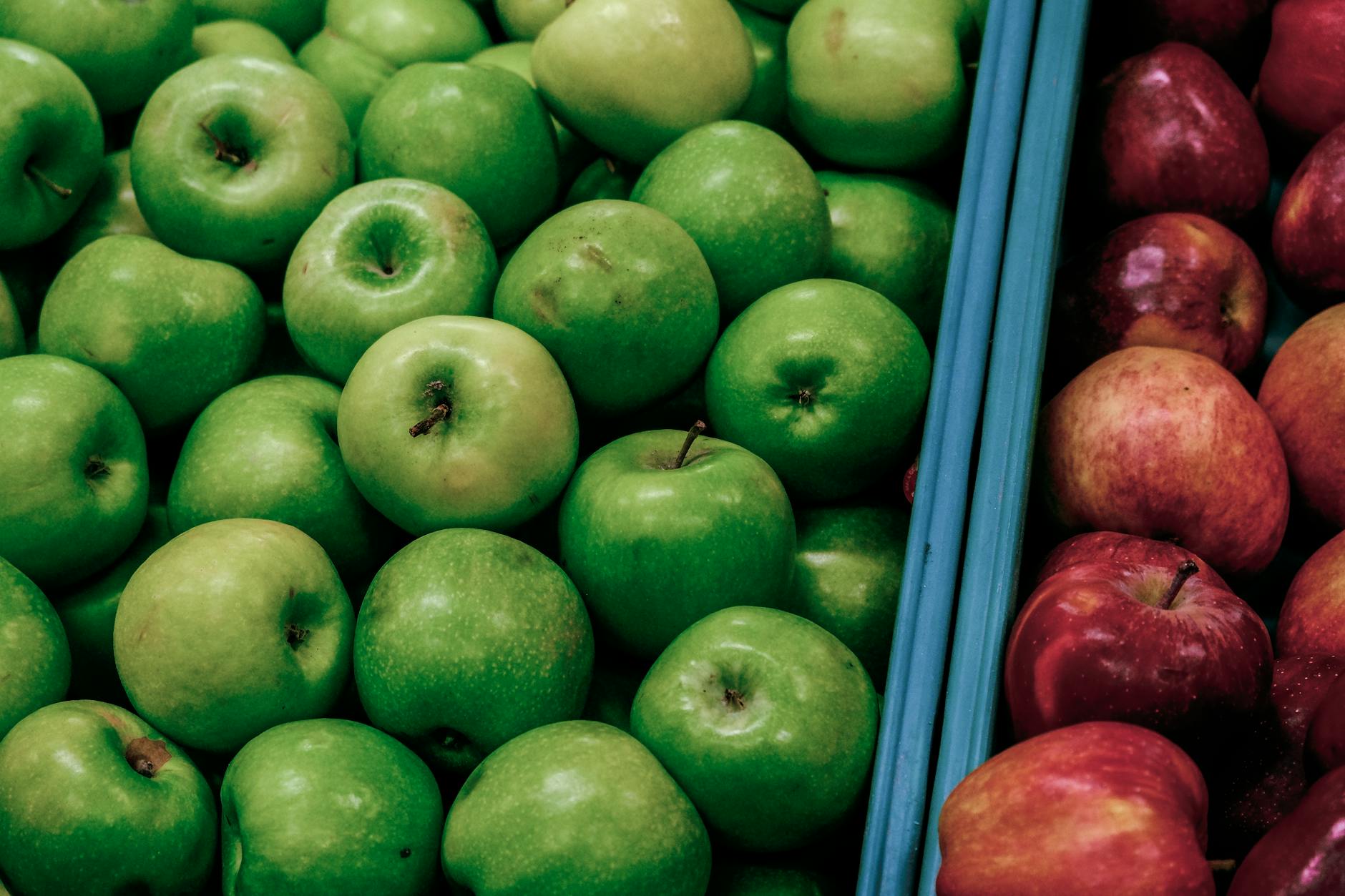
Now walk into your local grocery store. Count the varieties. If you're lucky, you'll find twelve. More likely eight or nine.
Somewhere between 17,000 and nine, something went very wrong.
How the Supermarket Apple Became a Monoculture
The story of how American apple diversity collapsed is really a story about what industrial food production optimizes for — and flavor isn't on the list.
Before the 20th century, apples were extraordinarily regional. Different climates, soils, and microclimates produced different fruit, and farmers and orchardists cultivated hundreds of local varieties suited to their specific conditions. An apple from the mountains of Virginia tasted nothing like an apple from upstate New York, and both tasted nothing like something grown in the Pacific Northwest.
Then came refrigerated shipping, national grocery chains, and a food system that needed to move produce from farm to shelf across thousands of miles without it turning into mush. Suddenly, the qualities that made an apple commercially viable had almost nothing to do with how it tasted. What mattered was shelf life. Uniformity. The ability to survive mechanical harvesting, long-haul trucking, cold storage for months at a time, and still look good under fluorescent lighting.
Varieties that ticked those boxes got planted everywhere. Varieties that didn't — which was most of them — got quietly abandoned. Orchards were torn out and replanted with Red Delicious, Golden Delicious, Granny Smith, Fuji, Gala. By the mid-20th century, the consolidation was dramatic. Thousands of regional varieties had simply stopped being grown commercially.
The Red Delicious is probably the most notorious casualty of this process, in a perverse way — it became so dominant that breeders kept selecting for its visual qualities (that deep red color, the five-pointed bottom) long after the flavor had been essentially bred out of it. The result was an apple that looked spectacular and tasted like sweetened cardboard. It dominated American grocery stores for decades anyway, because it shipped well and photographed beautifully.
The Varieties You've Never Tasted
Here is where this story gets genuinely exciting, because the apples that got left behind are, in many cases, extraordinary.
Take the Roxbury Russet, believed to be the oldest apple variety originating in North America, dating to the early 1600s in Massachusetts. It's not pretty — the skin is rough, greenish-brown, and almost leathery. But the flavor is nutty, tart, and complex in a way that no supermarket apple comes close to.
Or the Black Oxford, a dark purple variety from Maine with dense, sweet flesh and a flavor that serious apple people describe as having notes of spiced wine. It keeps remarkably well through winter, which made it a farmhouse staple in the 19th century.
There's the Calville Blanc d'Hiver, a French variety grown in America since colonial times, which Thomas Jefferson cultivated at Monticello. It's pale, irregular in shape, and contains more vitamin C than an orange. Baked, it becomes something closer to a dessert than a side dish.
The Esopus Spitzenburg, another variety from New York, was reportedly one of Jefferson's favorites for eating fresh. It's spicy, rich, and aromatic in a way that modern cultivars simply aren't.
And then there's the Newtown Pippin, a New York variety from the early 1700s that became the first American apple exported to Britain, where it was reportedly a favorite of Queen Victoria. It's tart, firm, and has a complex flavor that develops over months in storage — the kind of apple that actually improves the longer you keep it.
None of these are available at Kroger.
The People Who Refused to Let Them Die
The reason these apples still exist at all is because of a scattered network of obsessive orchardists, amateur pomologists, and agricultural heritage organizations who spent decades quietly refusing to let them disappear.
Organizations like Seed Savers Exchange in Iowa and CORGI (the Conservation of Rare and Genetic material in orchards) have catalogued and preserved hundreds of heirloom varieties. The USDA's National Plant Germplasm System maintains a collection of apple genetics at research stations in Geneva, New York, and Corvallis, Oregon. Small heritage orchards from Vermont to Washington State have planted out collections of dozens or hundreds of old varieties, sometimes sourced from a single surviving tree found on an abandoned farm.
Some of the most remarkable preservation work has been done by individuals. Orchardists like Tom Burford in Virginia — who spent his life documenting and growing Appalachian apple varieties — essentially functioned as one-person archives for fruit that would otherwise have been lost entirely. His 2013 book Apples of North America is something between a field guide and an elegy.
Where to Actually Find Them
The good news is that heirloom apples are genuinely findable if you know where to look.
Farmers markets are the most accessible entry point, particularly in the Northeast, Pacific Northwest, and upper Midwest, where heritage orchard culture is strongest. Fall is the season — most heirloom varieties ripen between August and November, and farmers market vendors in apple-growing regions often bring varieties you've never seen before. Ask questions. Most orchardists love talking about their fruit.
Heritage orchards and farm stands in states like New York, Vermont, Virginia, Michigan, Washington, and Oregon sometimes grow dozens of old varieties and sell direct. A quick search for "heirloom apple orchard" plus your state will usually turn up something within driving distance.
Online retailers like Mercier Orchards, Beak & Skiff, and various small operations on Goldbelly ship heirloom apple boxes in season. Nurseries like Stark Bros, Cummins Nursery, and Trees of Antiquity sell heirloom apple trees if you want to grow your own.
And if you want to go deep, the Slow Food USA Ark of Taste maintains a list of heirloom apple varieties considered at risk of extinction — which doubles as an excellent shopping list.
Why It's Worth Caring About
This isn't just about nostalgia for old-timey fruit. Genetic diversity in apple cultivation is a practical issue. A food system built on a handful of nearly identical cultivars is vulnerable in ways that a diverse one isn't — to disease, to climate shifts, to the kinds of slow-moving agricultural crises that don't make headlines until it's too late.
But honestly, beyond the food security argument, there's a simpler reason to care: the apples you've been eating your whole life are a pale shadow of what's out there. Somewhere right now, there's a gnarled tree on a hillside in Vermont or a small orchard in eastern Washington producing fruit that would make you rethink everything you thought you knew about apples.
You just have to know to go looking.