Upstate New York Was Making World-Class Cheese Long Before Vermont Got Famous for It
The Cheese That Crossed the Atlantic the Wrong Way
Here's something that doesn't quite fit the story we've been told about American food: in the mid-1800s, English importers were buying cheese from upstate New York. Not the other way around.
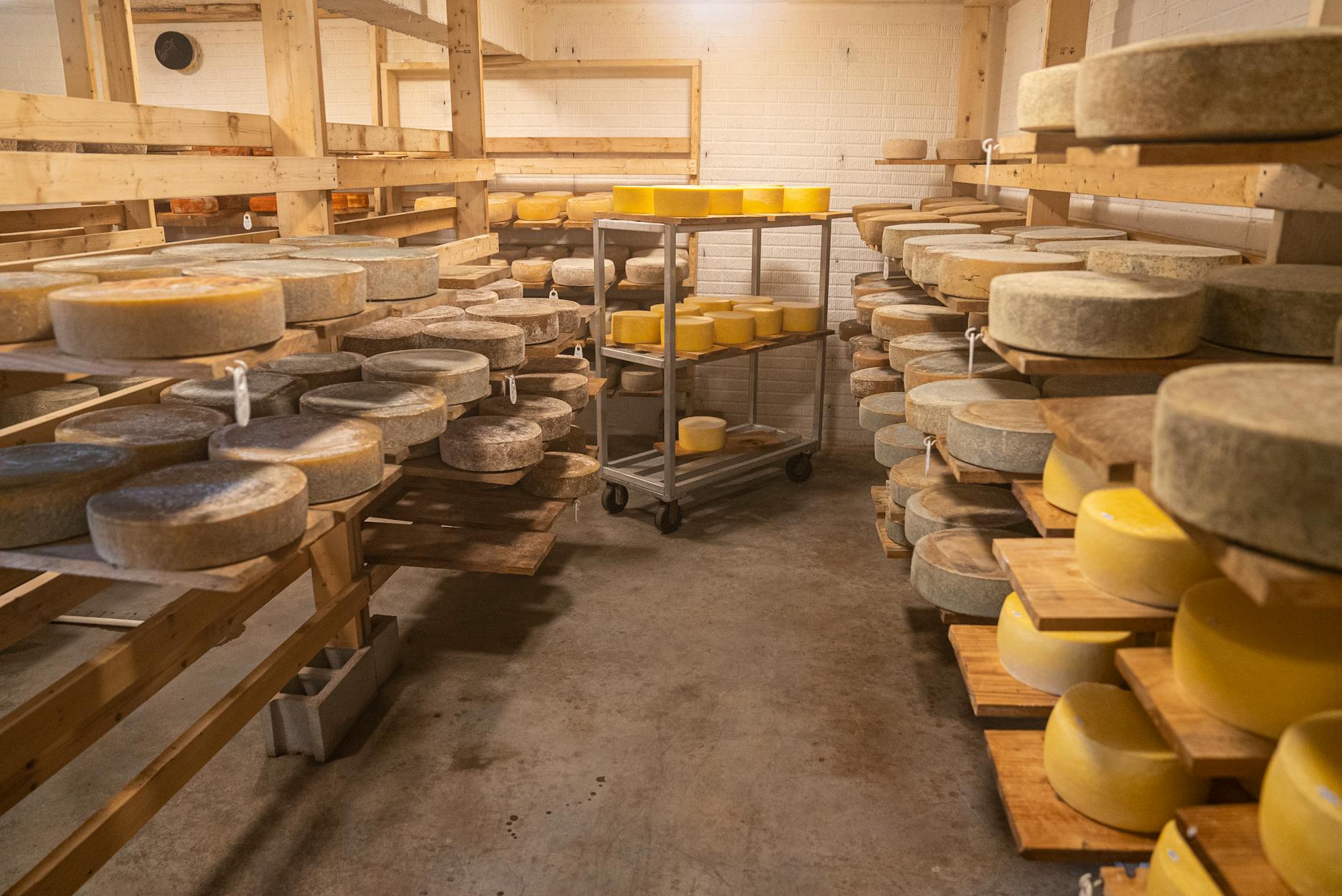
The cheese in question was Herkimer County cheddar — a sharp, dense, amber-hued wheel aged in the natural cool of limestone caves along the Mohawk Valley. It was nutty, complex, and crumbly in a way that took time to develop. At its peak, Herkimer County in central New York was producing more cheese than any other county in the United States, and the stuff was good enough to earn a following across the Atlantic. That's not a footnote in some obscure dairy journal — that's a legitimate culinary origin story that most Americans have never heard.
So what happened?
How a Cheese Gets Erased
The short answer is industrialization. The longer answer involves a slow squeeze that took decades to complete.
Through the late 1800s and into the early 20th century, large-scale creameries began consolidating dairy production across the Northeast. Efficiency became the point. Aging cheese in caves for a year or more was expensive, unpredictable, and hard to scale. The distinctive sharpness that made Herkimer County cheddar worth exporting came from exactly the kind of slow, careful process that factory production couldn't accommodate.
By the time World War II rationing reshaped American food habits, the artisan cheddar tradition in upstate New York had already been quietly hollowed out. What replaced it — nationally — was the mild, rubbery, uniform block cheddar that still dominates supermarket shelves today. Processed cheese spread didn't help. Neither did the cultural shift toward convenience foods in the postwar era.
For most of the 20th century, Herkimer County cheddar existed mostly in memory. A few small producers kept making something in the general tradition, but the real thing — properly aged, cave-finished, made from local milk — had effectively vanished.
What Made It Different in the First Place
To understand why this cheese is worth caring about, it helps to know what set it apart.
Herkimer County cheddar was typically aged for a minimum of one year, with premium wheels going two or three. That extended aging produced a sharp, almost savory bite and a dry, granular texture that crumbled cleanly under a knife — similar to a good aged Parmigiano in structure, but distinctly American in flavor profile. The milk came from local herds grazing on the particular grasses of the Mohawk Valley, which gave the cheese a subtle terroir the way wine has one.
The caves mattered too. Natural limestone cave environments maintain consistent humidity and temperature in ways that modern climate-controlled aging rooms approximate but don't quite replicate. The microbial environment of a cave does something to cheese that's difficult to manufacture on purpose.
None of this was accidental. Early Herkimer County cheesemakers developed these methods deliberately, competing with European imports by out-aging and out-flavoring them. It worked. Then it was forgotten.
The Quiet Revival Happening Right Now
Here's where the story turns in an unexpected direction. A small but determined group of cheesemakers in and around Herkimer County has spent the last two decades trying to reconstruct what was lost.
This isn't a trendy artisan cheese movement with a slick marketing campaign behind it. It's quieter than that — more like an archaeological project than a business launch. Producers have gone back to historical records, old dairy cooperative documents, and oral histories to piece together what the original process actually looked like. Some have experimented with cave aging on their own properties. Others have partnered with small local dairies to source milk from herds that graze on the same land where 19th-century cheese farmers worked.
The results aren't uniform — this is handmade food, not a standardized product — but the best examples are genuinely striking. Tasting a properly aged Herkimer-style cheddar next to a supermarket block is the kind of comparison that makes you feel a little cheated by what's been normalized.
How to Actually Find Some
Tracking down authentic Herkimer County cheddar takes a little effort, which is honestly part of what makes it interesting.
Your best starting point is the Herkimer County area itself. The town of Ilion and the surrounding Mohawk Valley have small producers who sell at regional farmers markets and through direct farm sales. If you're not in a position to make the trip, a handful of specialty cheese shops in New York City carry aged New York cheddars from small upstate producers — it's worth calling ahead and asking specifically about Herkimer-style or cave-aged New York cheddar.
Online, some small-batch producers ship directly, though aged cheese shipping requires careful packaging and tends to be pricier than you'd expect. Murray's Cheese in Manhattan has historically stocked regional New York varieties and is worth checking.
If you're serious about it, the best move is to plan a weekend in the Mohawk Valley. The area is genuinely beautiful in fall, the drive from New York City is manageable, and you'll almost certainly come home with something worth talking about.
Why This Cheese Is Worth More Than Nostalgia
It would be easy to frame the Herkimer County cheddar story as pure nostalgia — a lament for something lost. But that misses the more interesting point.
What this cheese represents is proof that American artisan food culture predates the current artisan food revival by about 150 years. The idea that the U.S. has always been a culinary follower, importing its sophistication from Europe, falls apart pretty quickly when you look at what was happening in a small New York county in the 1850s. Cheesemakers there weren't imitating Europe. They were competing with it — and winning.
Recovering that story, and the cheese that goes with it, feels like something worth doing.