Before Wheat Took Over the Plains, This Ancient Grain Was Already Feeding the Continent
The Grain the Settlers Didn't Notice
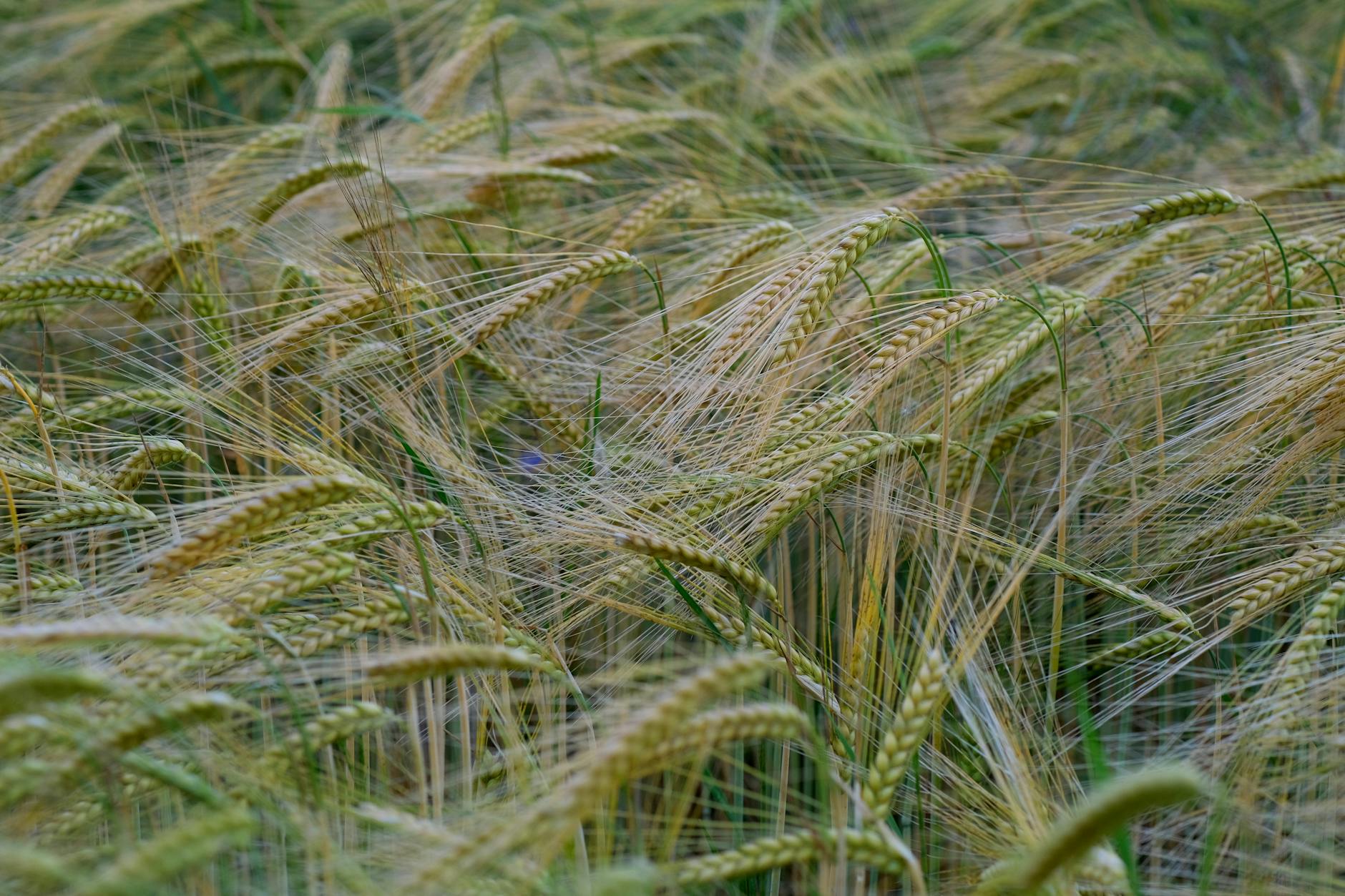
When European settlers moved across the Great Plains in the 19th century, they brought wheat with them and planted it as far as the eye could see. Within a few generations, the image of the American Midwest as wheat country had become so fixed that most people assumed it had always been that way.
It hadn't.
Long before a single wheat seed arrived on the continent, Native communities across the Plains were growing, trading, and cooking with a grain called Mandan corn — specifically, a collection of Indigenous corn varieties developed by the Mandan, Hidatsa, and Arikara peoples of the upper Missouri River region, along with other grains and crops adapted to the brutal conditions of the Great Plains. But among the most remarkable and least-known of these was a small-seeded grain called Amaranthus cruentus, or grain amaranth — a crop so well-suited to the climate that it required almost no irrigation, survived temperature swings that would destroy modern commodity crops, and produced a seed so nutritionally dense that it served as a staple food across a vast geographic range.
This is its story, and the reason it matters right now.
A Crop Built for the Worst Conditions
Grain amaranth is not a grass, which immediately sets it apart from every major grain in the modern American food system — wheat, corn, rice, and oats are all grasses. Amaranth is a broadleaf plant, technically a pseudocereal, and it produces thousands of tiny seeds per plant that can be ground into flour, cooked whole like a porridge, or popped like popcorn.
What made it extraordinary on the Great Plains was its relationship with adversity. Amaranth is drought-tolerant in a way that modern agricultural engineers are still studying. It photosynthesizes using a mechanism called C4 carbon fixation, which allows it to use water and sunlight more efficiently than most plants under heat stress. In practical terms, this means it can produce a meaningful harvest in conditions that would cause wheat or corn to fail entirely.
Native farmers on the Plains understood this through centuries of observation, not laboratory analysis. They cultivated amaranth alongside other crops as part of an integrated food system that was resilient precisely because it wasn't monoculture. Different plants failed in different conditions; something always survived.
The nutritional profile of the grain itself is striking even by modern standards. Amaranth contains all nine essential amino acids, making it one of the few plant foods considered a complete protein. It's high in iron, magnesium, and calcium. It's naturally gluten-free. A handful of amaranth seed contains more protein by weight than the same amount of wheat.
How Colonization Erased It
The disappearance of grain amaranth from the American agricultural landscape wasn't accidental. It was the direct result of colonization, in multiple overlapping ways.
The forced removal of Native peoples from their traditional lands disrupted the agricultural knowledge systems that had sustained these crops for centuries. Seed saving — the practice of selecting and preserving seeds from the best plants each year — requires continuity of place and community. When communities were displaced, the seeds often didn't travel with them, or the conditions to grow them no longer existed.
There was also active suppression. In some regions, colonial authorities and missionaries associated Indigenous food practices with cultural resistance and discouraged or outright prohibited them. Growing traditional crops was, in some contexts, a political act — which made it dangerous.
By the early 20th century, grain amaranth had effectively vanished from mainstream American agriculture. It persisted in small pockets — certain Pueblo communities in the Southwest continued growing it, and a few Mesoamerican varieties survived in Mexico — but as a Great Plains staple, it was gone.
Wheat moved in and filled the space so completely that the absence of what came before became invisible.
The Seed Keepers Bringing It Back
The revival of grain amaranth in the United States is happening slowly, and it's being driven primarily by Indigenous farmers and seed preservation organizations rather than by the agricultural mainstream.
Groups like the Native American Food Sovereignty Alliance and the Seed Savers Exchange have worked for decades to locate, document, and redistribute Indigenous seed varieties that survived the 20th century in small quantities. Some of these seeds were found in museum collections, stored in conditions that barely preserved their viability. Others were held by individual families who had quietly maintained the practice of growing them across generations.
The work of bringing these seeds back into active cultivation is painstaking. A seed that has been dormant for decades may have reduced germination rates. Growing conditions have changed. The knowledge of how to process and cook the grain — how to pop it, how to grind it, how to ferment it — has to be reconstructed alongside the agricultural practice.
But the results are real. Small farms in the Dakotas, Montana, and the Southwest are now producing grain amaranth again. Indigenous-led food businesses are beginning to sell amaranth flour and whole grain through direct channels. The crop is being grown.
Why the Timing Is Not a Coincidence
The climate relevance of this revival is hard to overstate without veering into the kind of breathless framing this story doesn't need. So here are just the facts.
The Great Plains is getting hotter and drier. The Ogallala Aquifer, which supplies irrigation water to a significant portion of American wheat and corn production, is being depleted faster than it can recharge. Climate scientists have been explicit for years that the current agricultural model in the Plains is not sustainable under projected conditions.
Grain amaranth was designed — through centuries of Indigenous selective cultivation — for exactly the conditions that are coming. It doesn't need the Ogallala. It can handle heat that breaks wheat. It produces nutritious food from soil that commodity agriculture has spent decades exhausting.
The people who developed this crop understood something about the Great Plains that the settlers who replaced them didn't bother to learn. That knowledge, encoded in seeds that nearly didn't survive, is now quietly being put back into the ground.
That's not a trend. That's a correction.