The Underground Feast: How Mountain Folk Turned Forest Floors Into Winter Pantries
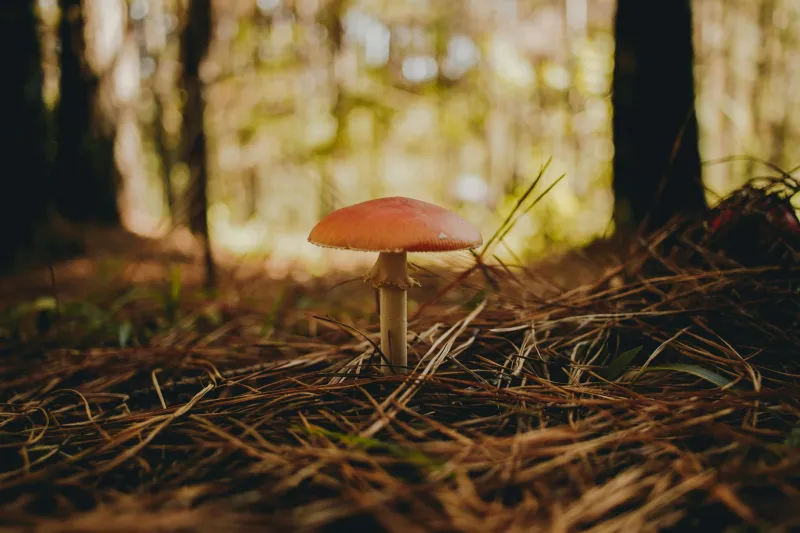
Walk through any trendy restaurant in Brooklyn or San Francisco today, and you'll likely spot exotic mushrooms scattered across the menu — hen-of-the-woods here, oyster mushrooms there, maybe even some foraged chanterelles if you're lucky. What most diners don't realize is that this "cutting-edge" culinary trend is actually older than America itself.
Deep in the mountains of Appalachia, families have been living off wild fungi for generations, turning forest floors into reliable winter pantries when other food sources ran thin. While city folk were buying canned goods at the general store, mountain communities were harvesting dozens of mushroom varieties that most Americans have never even heard of.
The Keepers of Ancient Knowledge
Mary Ellen Dockery, 78, still remembers following her grandmother through the misty hollows of eastern Kentucky, learning to spot the telltale signs of edible fungi hiding beneath fallen logs and nestled against oak roots. "Granny could find mushrooms where nobody else saw nothing but dead leaves," she recalls, her weathered hands gesturing toward the dense forest behind her cabin.
This wasn't casual weekend foraging — it was survival science passed down through oral tradition. Mountain families developed an intricate understanding of which mushrooms appeared when, where to find them, and most importantly, which ones wouldn't kill you. They knew that chicken-of-the-woods grew on dying oak trees in late summer, that wine cap mushrooms thrived in wood chip piles, and that certain bracket fungi could be dried and ground into a protein-rich flour that lasted all winter.
"People think we were just poor folks eating whatever we could find," says Dockery. "But we had a whole system. We knew more about mushrooms than most scientists do today."
Beyond Survival: Medicinal Mysteries
The mountain mushroom tradition went far beyond simple nutrition. Many families maintained detailed knowledge of fungi's medicinal properties, using specific varieties to treat everything from respiratory ailments to digestive issues. Turkey tail mushrooms were brewed into teas for immune support. Chaga, growing on birch trees at higher elevations, was scraped off and used to treat stomach problems.
Dr. Patricia Williams, an ethnobotanist at East Tennessee State University, has spent years documenting this disappearing knowledge. "These communities developed incredibly sophisticated understanding of mycology without any formal scientific training," she explains. "They were practicing what we now call functional medicine centuries before it had a name."
Williams has identified over 40 different mushroom species that were commonly used by Appalachian families, many of which are only now being studied by modern researchers for their potential health benefits.
The Knowledge Keepers
Today, this ancient wisdom is vanishing faster than morning mist in the mountains. Younger generations have moved to cities, and the elders who carry centuries of mushroom knowledge are passing away without fully transferring their expertise.
But a small group of dedicated individuals is fighting to preserve what's left. Jake Morrison, a 34-year-old mycologist who grew up in rural West Virginia, spends his weekends hiking through remote hollows, recording interviews with elderly foragers and mapping traditional mushroom hunting grounds.
"Every time one of these old-timers passes away, we lose a library of information that can't be found in any textbook," Morrison says. "They can spot edible mushrooms in conditions that would stump a PhD mycologist."
From Holler to High-End Kitchen
Ironically, as this traditional knowledge fades in its homeland, upscale restaurants are paying premium prices for the same wild mushrooms that mountain families harvested out of necessity. Chef Marcus Reynolds of a James Beard-nominated restaurant in Nashville sources several varieties directly from Appalachian foragers.
"The flavor profiles are incredible," Reynolds explains. "These aren't your typical button mushrooms. We're talking about fungi with complex, earthy tastes that can't be cultivated commercially."
Reynolds pays up to $20 per pound for certain varieties — a price that would have seemed impossible to mountain families who once gathered them by the basketful.
Racing Against Time
The irony isn't lost on researchers like Dr. Williams. As trendy restaurants celebrate "foraged" ingredients and wellness enthusiasts discover the benefits of medicinal mushrooms, the communities that perfected these practices centuries ago are seeing their knowledge disappear.
"We're essentially watching the end of an oral tradition that sustained people through some of the hardest times in American history," she says. "Once it's gone, it's gone forever."
Some efforts are underway to preserve this knowledge. Morrison has partnered with local libraries to create digital archives of foraging interviews. The Appalachian Studies program at several universities now includes courses on traditional food systems. A few younger mountain residents are working with elders to document family mushroom recipes and identification techniques.
The Forest Floor Pharmacy
What makes this loss particularly tragic is the sophistication of the knowledge being forgotten. Mountain families didn't just know which mushrooms were safe to eat — they understood complex ecological relationships, seasonal patterns, and preparation methods that maximized both nutrition and flavor.
They knew that certain mushrooms needed to be cooked thoroughly while others could be eaten raw. They understood which varieties dried well for winter storage and which were best preserved in salt brine. Some families even developed techniques for cultivating mushrooms on fallen logs, creating sustainable harvests that could feed them for years.
"It was like having a pharmacy and grocery store right in the woods," Dockery reflects. "We never went hungry, even in the worst winters, as long as we knew where to look."
As modern America rediscovers the value of wild foods and natural medicine, perhaps it's time to look backward as well as forward — to the mountain hollows where this knowledge still flickers like embers, waiting for someone to fan the flames before they go cold forever.