The Women Running Church Kitchens Were Basically Catering Geniuses — Nobody Just Bothered to Write It Down

Photo: church basement potluck dinner Midwest fellowship hall casserole dishes community meal, via i.pinimg.com
If you grew up anywhere in the upper Midwest, you probably have a memory that involves a church basement, fluorescent lighting, folding tables covered in mismatched casserole dishes, and at least one elderly woman who seemed to be everywhere at once — refilling coffee, directing traffic, and somehow knowing exactly when the hot dishes were done without ever checking a timer. What you were watching, without realizing it, was the tail end of one of the most sophisticated grassroots food systems America ever produced.
The Fellowship Hall as Command Center
The story starts with immigration. German Lutheran and Norwegian Lutheran communities settling across Minnesota, Wisconsin, Iowa, and the Dakotas in the mid-to-late 1800s brought with them a cultural expectation that the church was not just a place of worship but a center of community life — and community life required feeding people. Funerals, weddings, harvest celebrations, confirmation dinners, mission society meetings: all of it happened in the fellowship hall, and all of it required food at a scale that a single household couldn't manage.
What emerged wasn't a formal catering operation. It was something more organic and, in retrospect, more impressive. Women within these congregations developed an informal but highly structured system for organizing communal meals that could serve anywhere from fifty to several hundred people with almost no advance notice, no paid staff, and no commercial kitchen equipment.
The genius was in the organization — specifically, in a hierarchy that most outsiders never saw.
The Unwritten Hierarchy
Every church kitchen had one. She wasn't elected. Her title wasn't printed in the bulletin. But there was always a woman — usually in her sixties or seventies, usually someone whose family had been in that congregation for two or three generations — who was the actual operational authority of the kitchen. Food historians who have studied Midwestern church culture sometimes call her the "kitchen matriarch," though she would have laughed at the term.
This woman knew things that nobody had written down because nobody had needed to. She knew how many pounds of ground beef it took to feed 200 people in a hot dish. She knew which members could be trusted with a Jell-O salad and which ones needed to be redirected to bringing rolls. She knew how to stagger oven temperatures across multiple dishes so everything came out hot at the same time despite the kitchen having only two ovens. She knew, almost intuitively, how to scale a recipe designed for eight people up to a recipe for 150 — something that professional cooks will tell you is genuinely difficult because the ratios for salt, fat, and liquid don't scale linearly.
This knowledge was transmitted not through cookbooks but through proximity. Younger women learned by standing next to the matriarch, watching, and being corrected in real time. It was apprenticeship without the formal title.
The Casserole as Engineering Project
The dishes themselves were not accidental. The classic Midwestern church potluck canon — the hot dish, the Jell-O mold, the bars, the funeral potatoes — looks humble on the surface. Look closer and you'll find a set of foods that were specifically optimized for communal feeding under difficult conditions.
Hot dishes, for instance, are forgiving in a way that most cooking isn't. They can be assembled in advance, transported without spilling, held at temperature for extended periods, and scaled up or down without catastrophic failure. The condensed soup base that modern food critics love to mock was a genuine technological development — it provided consistent flavor, reliable texture, and stable moisture content in a dish that might be sitting in a church kitchen for two hours before it was served. It wasn't laziness. It was engineering.
The dessert bars were similarly strategic. Unlike a layer cake, which requires assembly, refrigeration, and careful slicing, bars could be baked in a 9x13 pan, transported in the same pan, cut on-site, and served without plates. They were also inexpensive, which mattered in communities where many families were operating on tight margins.
The Potluck as Social Algorithm
What's easy to miss about the church potluck system is how carefully it managed social dynamics alongside the logistics. The unwritten rules governing who brought what weren't arbitrary — they were a finely tuned mechanism for distributing contribution fairly while accounting for economic variation within the congregation.
Families with more resources were quietly expected to bring more substantial dishes. Newer members were given low-stakes assignments (rolls, a simple dessert) that allowed them to participate without the pressure of performing for an audience that had been judging each other's cooking for decades. Elderly members who could no longer cook were assigned to bring store-bought items without anyone making a point of it. The whole system ran on social awareness that the kitchen matriarch and her circle maintained with impressive precision.
Food scholars like Psyche Williams-Forson and Jessamyn Neuhaus have written about the way women's domestic labor — particularly in religious communities — was systematically undervalued precisely because it looked effortless when it was done well. The church basement kitchen is a perfect example. Because the food appeared on the table smoothly, reliably, and without visible drama, the organizational labor behind it was effectively invisible.
 Photo: Jessamyn Neuhaus, via tophat.com
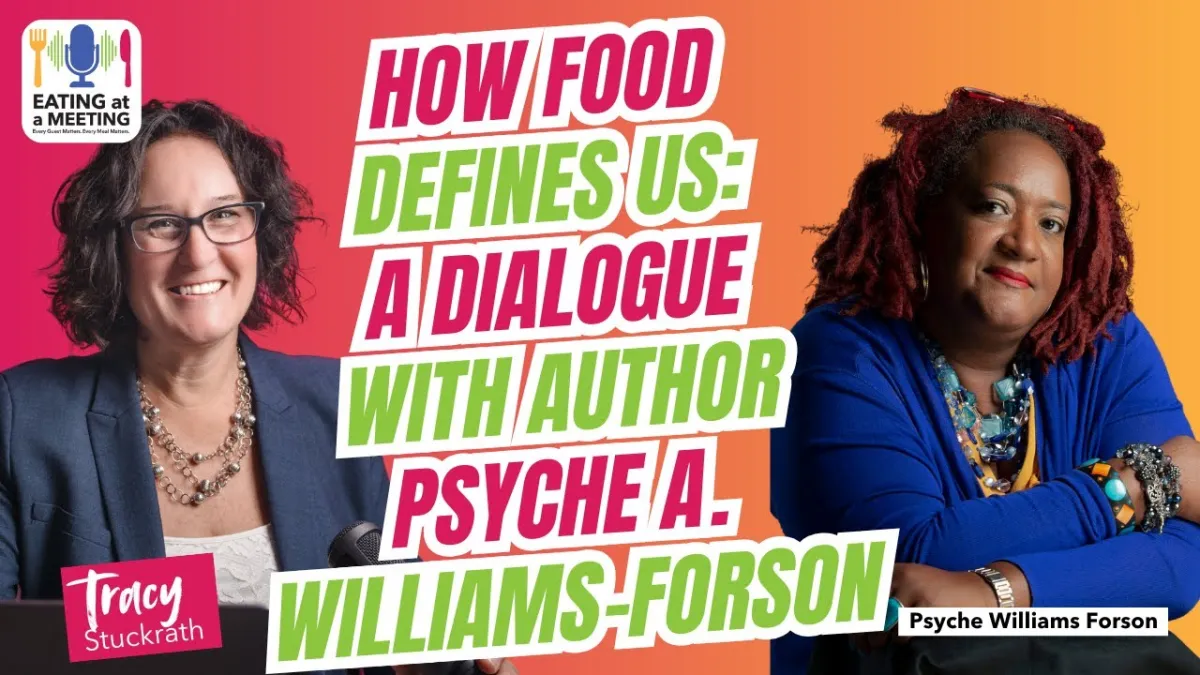 Photo: Psyche Williams-Forson, via i.ytimg.com
What Got Passed Down — and What Didn't
Some of this knowledge survived. Church cookbooks, those spiral-bound volumes sold as fundraisers, captured individual recipes but almost never captured the system — the sequencing, the substitution logic, the crowd-scaling instincts that made the whole operation work. What was lost when the kitchen matriarchs of the mid-twentieth century passed on wasn't just recipes. It was operational knowledge that no one had thought to document because it seemed too obvious to write down.
There's a certain irony in the fact that professional caterers and event planners now charge considerable fees for exactly the kind of large-batch logistics expertise those church basement kitchens ran on for free, sustained entirely by women who were never paid, rarely credited, and almost never celebrated.
The covered dish you bring to a summer cookout, the casserole you drop off at a neighbor's house after a loss, the instinct to feed a crowd when something important happens — that's their inheritance. It just didn't come with a name attached.