The Root Cellar Network That Kept an Entire Region Alive — and Never Got a Dime of Credit
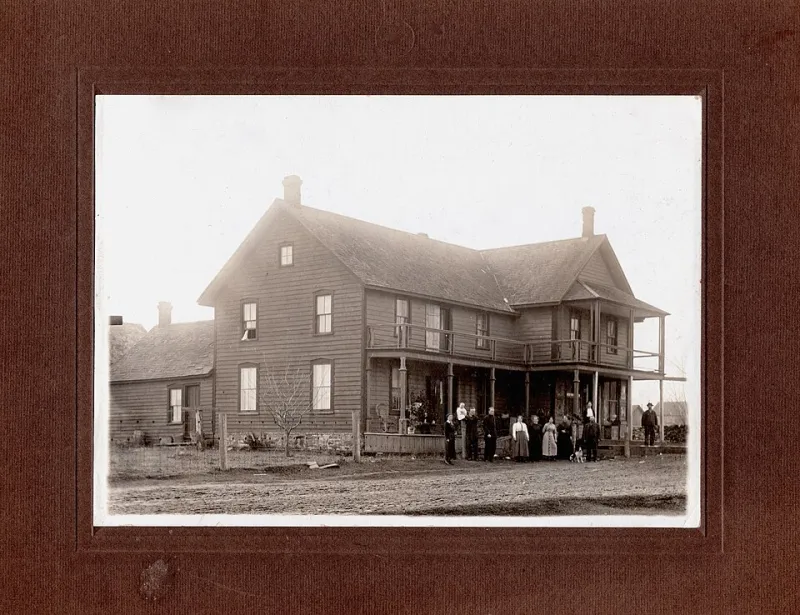
Photo: CDHS, No restrictions, via Wikimedia Commons
In the winter of 1888, a blizzard hit the Upper Midwest so ferociously that it was later nicknamed the Schoolchildren's Blizzard — because it struck during school hours and killed hundreds of people who couldn't make it home across open fields. For families who had prepared, who had stocked their cellars and laid in their winter provisions the way their grandmothers had taught them in Norway and Sweden and Denmark, it was a brutal few days. For families who hadn't, it was a catastrophe.
The communities that came through that winter best weren't the ones with the most money or the biggest farms. They were the ones with the deepest cellars and the most organized neighbors. And a disproportionate number of those organized, well-stocked, survival-ready communities were Scandinavian.
This is the story of a food infrastructure that saved lives, shaped a regional food culture, and then quietly disappeared from the history books.
What They Brought With Them
When Norwegian, Swedish, and Danish immigrants began settling Minnesota in large numbers in the 1860s and 1870s, they were arriving from some of the most food-preservation-savvy cultures on earth. Scandinavian winters are long, dark, and genuinely dangerous. For centuries, the ability to store food from one harvest to the next wasn't a skill — it was the difference between surviving and not.
They brought that knowledge with them in their heads and their hands.
Root cellars were standard in Scandinavian farm culture long before Minnesota was even a state. The technique was well understood: dig deep enough to get below the frost line, construct walls that would hold moisture and temperature steady, and you have a natural refrigerator that will keep root vegetables, preserved meats, dairy products, and fermented foods viable through months of brutal cold.
But what Scandinavian settlers did in Minnesota wasn't just individual root cellars. They built systems.
The Cooperative Cold Storage Model
In communities like those around Stearns County, Kandiyohi County, and the Red River Valley, Scandinavian settlers developed cooperative approaches to cold storage that went well beyond what any single family could manage alone. Neighboring farms would share larger communal cellars built at central locations between properties. Root vegetables, cured meats, and preserved dairy were pooled and managed collectively, with families contributing according to their harvest and drawing according to their need.
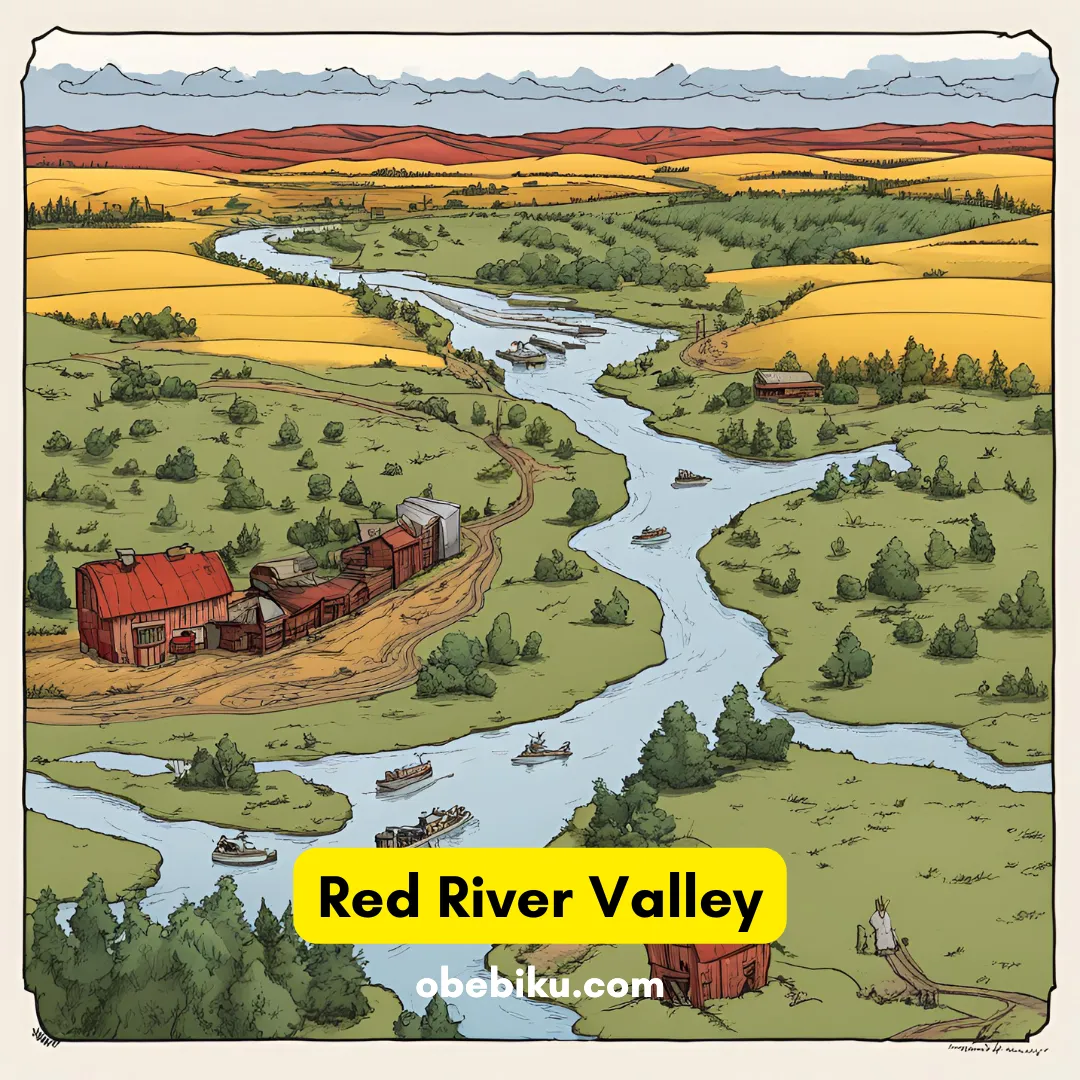 Photo: Red River Valley, via blogger.googleusercontent.com
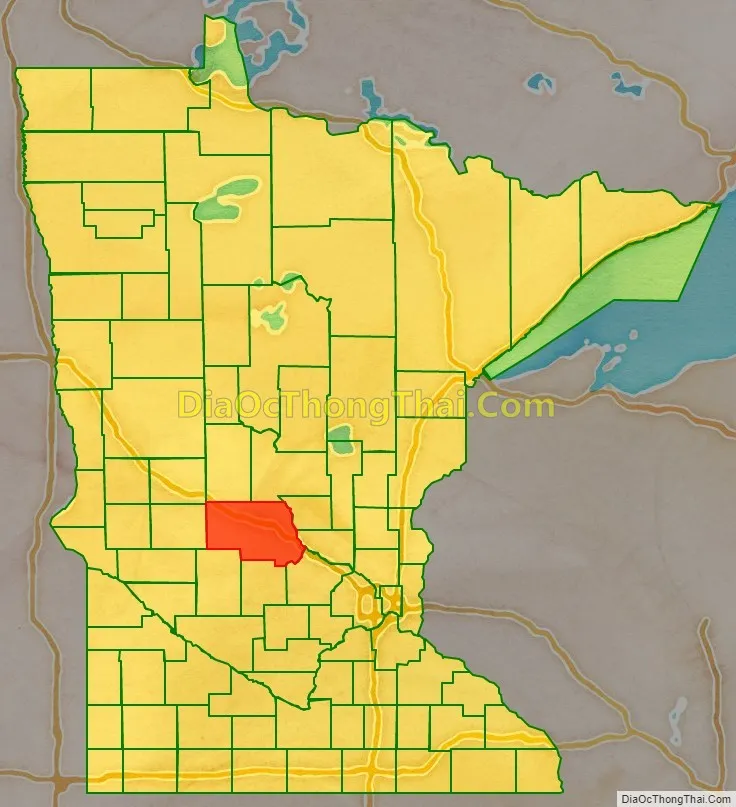 Photo: Stearns County, via cdn.diaocthongthai.com
This wasn't charity. It was engineering. A single large, well-constructed cellar maintained a more stable temperature than several smaller ones. The thermal mass was greater. The risk of a single family's provisions spoiling from a construction flaw was distributed across the group. It was, in the language of modern systems thinking, more resilient.
The cooperative model also reflected something cultural. In Norway and Sweden, the concept of dugnad — communal work done for shared benefit — was deeply embedded in rural life. You didn't just build your own cellar. You built the neighborhood's cellar, and then your neighbors built something else for the community, and the whole thing held together through mutual obligation rather than transaction.
What They Were Storing
The contents of these cellars tell their own story. Rutabagas, turnips, carrots, and potatoes were staples — hardy root vegetables that could survive months underground with minimal attention. Cabbages went in whole or were fermented into a Scandinavian-style sauerkraut that differed subtly from the German version, often seasoned with caraway and fermented slightly longer.
Dairy was a particular specialty. Hard cheeses, butter packed in crocks and sealed with brine, and cultured dairy products like a Norwegian-style soured cream could last through winter in the right conditions. Some families maintained small barrels of pickled fish — herring and, where they could get it, lake fish preserved in salt brine — that provided protein through the months when fresh food was impossible.
Cured and smoked meats hung from cellar rafters. Dried mushrooms and herbs, gathered in autumn, were stored in cloth bags. Jars of preserved fruit and berry preserves lined the shelves. A well-stocked Scandinavian cellar in a good year was, effectively, a miniature grocery store buried in the ground.
The Borrowing That History Forgot
Here's where the story gets a little complicated. As Scandinavian communities established these cold storage systems and proved their effectiveness through several brutal winters, their non-Scandinavian neighbors noticed. German settlers, Yankee transplants from New England, and families from other backgrounds began adopting similar techniques — the cooperative structures, the specific construction methods, the preservation approaches.
This is how good ideas spread, and there's nothing wrong with it. But the adoption happened quietly, without much acknowledgment of the source. By the early 20th century, cooperative cold storage had become simply "how things were done" in the Upper Midwest, with the Scandinavian origins of the most effective techniques largely forgotten in the retelling.
Local historical records from several Minnesota counties show the pattern clearly: Scandinavian families establishing cooperative cellars in the 1870s and 1880s, neighboring communities adopting similar structures within a decade, and then a gradual flattening of the cultural attribution as the techniques became regional common knowledge.
The Echo in Modern Minnesota Food Culture
Spend any time in rural Minnesota food culture today and you'll find echoes of this history in places you might not expect. The regional affinity for pickled and fermented vegetables. The comfort-food centrality of root vegetables that other American regions tend to overlook. The deep cultural instinct toward making things last, toward not wasting, toward stocking up before the weather turns.
These aren't accidental preferences. They're the residue of a survival system that worked, that spread, and that embedded itself in the food habits of an entire region over several generations.
The Scandinavian settlers who built those first cooperative cellars didn't get a plaque. Their names aren't on any food history monument. But the next time someone in the Upper Midwest pulls a jar of homemade pickles out of a basement shelf in January, there's a direct line back to a Norwegian farmer in Kandiyohi County who knew exactly how cold it was going to get — and planned accordingly.