How the Railroad Killed America's Salad: The 1920s Decision That Locked Us Into Iceberg Lettuce
The Great Salad Simplification
Walk into any American supermarket today and the produce section tells a story of abundance: rows of colorful vegetables, exotic fruits from around the world, organic options galore. But stop at the lettuce display and you'll find something strange — a wall of nearly identical pale green heads, each one a variation on the same basic theme.
This wasn't always the American salad story. Before the 1920s, farms across the country grew an astonishing variety of greens that most modern Americans have never heard of, let alone tasted. Buttery Boston lettuce that melted in your mouth. Peppery watercress that grew wild in streams. Bitter dandelion greens that added complexity to spring salads. Sharp-flavored rocket (what we now call arugula) that Italian immigrants brought to their backyard gardens.
Then the railroad changed everything — and not in the way you might expect.
Before the Iceberg Age
In the 1800s and early 1900s, American salad culture was intensely local and surprisingly diverse. Farm families grew what thrived in their climate and soil, creating regional salad traditions that reflected both the environment and the cultural background of local communities.
New England farms specialized in cold-hardy greens like mâche (corn salad) and winter cress that could survive harsh springs. Southern gardens grew heat-tolerant varieties like summer crisp lettuces and wild purslane that thrived in humidity. Midwest German communities cultivated endive and escarole, while Italian immigrants in urban areas grew cutting lettuces that could be harvested multiple times from the same plant.
"Every region had its own salad personality," explains agricultural historian Dr. Sarah Chen, who has studied the evolution of American produce distribution. "What you ate for salad in Vermont was completely different from what you ate in Georgia, and that wasn't seen as a problem — it was just how food worked."
Local markets sold whatever grew well nearby. Restaurant menus featured seasonal salad specials that changed based on what farmers could deliver fresh that week. Home cooks planned salads around what was available, developing recipes that celebrated the specific flavors of local greens.
The Refrigeration Revolution
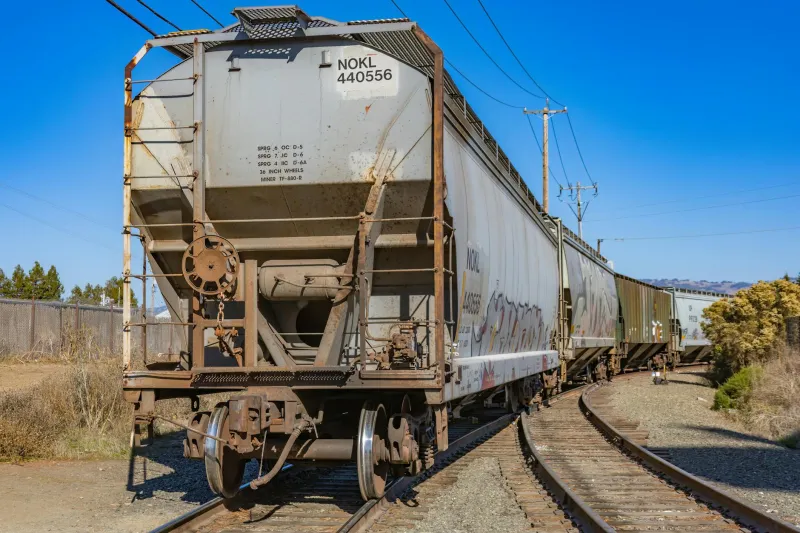
The transformation began with a technological breakthrough that seemed like pure progress: refrigerated railroad cars. By the 1920s, California's vast Central Valley had emerged as an agricultural powerhouse, capable of growing enormous quantities of produce year-round thanks to its climate and irrigation systems.
Sudenly, it became possible to harvest lettuce in California, pack it in ice, and ship it across the entire country while maintaining at least some semblance of freshness. For the first time in American history, a head of lettuce grown in Salinas could reach a dinner table in Boston or Atlanta.
But here's where the story takes an unexpected turn: not all lettuce varieties could survive this journey.
Why Iceberg Won the Transportation Lottery
Iceberg lettuce wasn't chosen for its superior flavor — it was chosen for its superior packaging qualities. The tight, dense heads could withstand the jostling of a cross-country rail journey. The thick outer leaves protected the inner core from damage. Most importantly, iceberg had a high water content and low respiration rate, meaning it could stay relatively fresh-looking for the week or more it took to travel from California farms to East Coast markets.
"Iceberg lettuce was essentially engineered by nature to be the perfect shipping vegetable," notes food systems researcher Michael Rodriguez. "It wasn't the most delicious option, but it was the only option that could reliably arrive at its destination looking like something people would want to buy."
Meanwhile, the delicate butterhead lettuces that had been staples of local agriculture couldn't handle the journey. Peppery greens like watercress wilted within days. Complex salad mixes that combined multiple varieties became impossible to ship as uniform products.
The Economic Logic That Killed Variety
As refrigerated rail distribution expanded, economic forces began reshaping the entire salad ecosystem. Grocery stores found it much simpler to order consistent quantities of a single lettuce variety rather than managing relationships with multiple local farms growing different greens. Restaurants could standardize their salad offerings without worrying about seasonal availability. Food distributors could streamline their operations around a single product that moved in predictable volumes.
Local farms faced an impossible choice: compete with California's massive scale and year-round growing season, or exit the lettuce business entirely. Most chose to exit, shifting their focus to crops that couldn't easily be shipped across the country.
"It wasn't that consumers suddenly decided they only wanted iceberg lettuce," explains Dr. Chen. "It's that iceberg lettuce became the only option consistently available in most American markets."
What We Lost in Translation
The shift to iceberg lettuce represented more than just a change in vegetable preferences — it was the beginning of a fundamental transformation in how Americans thought about fresh produce. For the first time, availability became disconnected from seasonality and geography.
Regional salad traditions that had developed over centuries began disappearing within a single generation. Italian-American families in Boston could no longer find the cutting lettuces their grandmothers had grown. German communities in Wisconsin lost access to the endive varieties that had been central to their traditional salads. Southern cooks had to adapt recipes that had been built around heat-tolerant greens that were no longer commercially available.
The knowledge of how to grow, prepare, and enjoy these diverse greens began fading from American food culture. By the 1950s, most Americans under thirty had never tasted anything but iceberg lettuce and had no idea that alternatives had once been common.
The Unintended Consequences of Efficiency
The railroad's refrigerated car system achieved exactly what it was designed to do: it made fresh produce available year-round across the entire country, breaking down the barriers of season and geography that had previously limited American diets.
But it also created an unintended consequence that its designers never anticipated: it accidentally locked American salad culture into its blandest possible expression.
"We gained convenience and consistency," reflects modern farmer and seed saver Lisa Thompson, who grows heritage lettuce varieties in Vermont. "But we lost complexity, seasonality, and the connection between what we ate and where we lived."
The Modern Rediscovery
Today, farmers markets and specialty grocers are slowly reintroducing Americans to the salad diversity that existed before the railroad made its choice for us. Heritage seed companies are working to preserve varieties that were once common but nearly disappeared from commercial cultivation.
Restaurants are featuring seasonal salad menus that change based on local availability. Home gardeners are discovering that growing their own salad greens opens up flavor possibilities that simply don't exist in the supermarket produce aisle.
But the infrastructure and economic systems built around iceberg lettuce remain powerful forces. Most Americans still encounter salad as a uniform product rather than a seasonal, regional expression of local agriculture.
The next time you're standing in the produce section, looking at those rows of identical iceberg heads, remember: this wasn't inevitable. It was the result of one technological innovation that prioritized shipping efficiency over flavor diversity — and accidentally reshaped American eating habits for the next century.