The Invisible Farmers: How Hmong Refugees Snuck 47 New Vegetables Into American Cuisine
The Saturday Morning Revolution
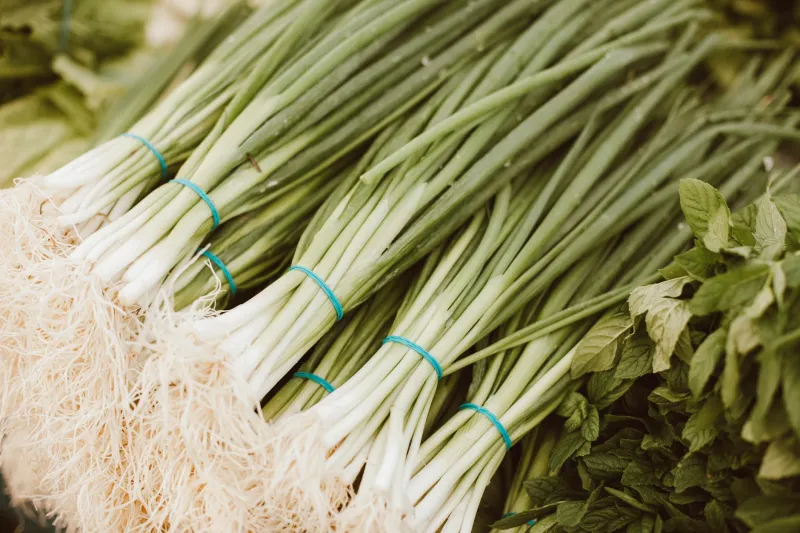
It started quietly, the way most revolutions do. A folding card table at the St. Paul Farmers Market in 1982. A Hmong grandmother named Mai Yang, arranging unfamiliar vegetables in neat piles: bitter melon with skin like a crocodile's back, Asian eggplants no bigger than golf balls, bundles of morning glory greens that most shoppers walked past without a second glance.
 Photo: St. Paul Farmers Market, via www.alphr.com
Mai had fled Laos four years earlier, part of the wave of Hmong refugees resettled across the upper Midwest after the Vietnam War. She spoke little English, had no farming experience in American soil, and was working with seeds smuggled in the hems of traditional clothing — the only agricultural inheritance that survived the journey.
What she was about to do, along with thousands of other Hmong families, would quietly transform American produce culture from the ground up.
Seeds in the Seams
The Hmong agricultural revolution began with an act of desperate preservation. As families fled Southeast Asia in the 1970s, many carried seeds sewn into clothing, hidden in jewelry, or swallowed and recovered later. These weren't random vegetables — they represented centuries of careful cultivation, varieties that had been selected for flavor, nutrition, and adaptation to specific growing conditions.
"My grandmother brought lemongrass seeds in her wedding necklace," remembers Kao Vang, whose family settled in Fresno in 1979. "She didn't know if they would grow here, but she knew we would need familiar food to feel human again."
Across Minnesota, Wisconsin, and California's Central Valley, Hmong families began experimenting with small plots, often in suburban backyards or rented corners of established farms. They were working with soil, climate, and growing seasons completely different from the mountainous regions of Laos where these crops had evolved.
Most agricultural experts would have predicted failure.
The Adaptation Miracle
Instead, something remarkable happened. The Hmong farmers didn't just successfully grow their traditional crops — they improved them. Working with University of Minnesota extension agents and local farming communities, they developed varieties that thrived in Midwestern conditions while maintaining the flavors and characteristics that made them valuable.
 Photo: University of Minnesota, via img.freepik.com
Thai basil adapted to shorter growing seasons. Asian cucumbers learned to handle Minnesota's temperature swings. Yard-long beans figured out how to produce in Wisconsin's clay soil.
"They were doing plant breeding at a level that impressed our agricultural scientists," explains Dr. James Moyer, who worked with Hmong farmers through the University of Minnesota's extension program. "They understood genetic diversity, soil adaptation, and crop rotation in ways that took our formal programs years to appreciate."
By the mid-1980s, Hmong farmers were producing vegetables that local restaurants had never heard of but quickly learned to crave.
The Quiet Market Revolution
While food magazines celebrated celebrity chefs "discovering" Asian ingredients, Hmong farmers were supplying the actual vegetables that made those discoveries possible. They became the invisible infrastructure of America's expanding palate.
At the St. Paul Farmers Market, Mai Yang's folding table grew into a permanent stall, then multiple stalls, then an entire section of the market dedicated to Hmong vendors. Similar transformations happened at farmers markets across the Twin Cities, in Fresno, and in smaller communities where Hmong families had settled.
The vegetables they introduced reads like a modern restaurant menu: bok choy, gai lan, mizuna, shiso, Thai chili peppers, winter melon, daikon radishes, and dozens of leafy greens that still don't have English names.
"We had customers who started coming just for vegetables they couldn't find anywhere else," remembers Tom Peterson, who managed the Minneapolis Farmers Market in the 1980s. "These families were introducing ingredients that high-end restaurants would charge premium prices for, and they were selling them for less than conventional vegetables."
The Credit Gap
Here's where the story gets complicated. As Asian ingredients became mainstream, as restaurants began featuring "exotic" vegetables, as grocery chains started stocking bok choy and Thai basil, the narrative rarely traced back to the Hmong farmers who had made it possible.
Food writers celebrated chefs who "introduced" Americans to Asian vegetables. Grocery executives took credit for "innovative" produce selections. Agricultural researchers published papers on "novel" crops without mentioning the families who had been perfecting them for decades.
Meanwhile, Hmong farmers continued working, expanding their operations, and developing new varieties that would eventually appear on restaurant menus across the country.
Beyond the Farmers Market
The influence extended far beyond weekend produce sales. Hmong farmers became key suppliers to restaurants, grocery stores, and food distributors. They pioneered small-scale, diversified farming that anticipated the local food movement by decades.
Many established agricultural operations that now supply vegetables to some of America's most celebrated restaurants. Vue's Organic Farm in California provides specialty greens to restaurants throughout the Bay Area. Shared Ground Farm in Minnesota supplies vegetables to co-ops and restaurants across the Twin Cities.
"The techniques we learned from Hmong farmers changed how we think about crop diversity and soil management," explains Sarah Johnson, who manages a community-supported agriculture program in Wisconsin. "They were practicing sustainable agriculture before it had a marketing name."
The Next Generation
Today, second and third-generation Hmong-American farmers are building on their families' agricultural innovations. They're combining traditional knowledge with modern farming technology, developing new varieties, and establishing agricultural businesses that bridge traditional and contemporary food systems.
Some are finally getting the recognition their families deserved decades earlier. Pakou Hang's farm in California was featured in Bon Appétit magazine last year. Lee Vang's operation in Minnesota supplies vegetables to several James Beard Award-winning restaurants.
But the broader story — how refugee families quietly transformed American agriculture while building new lives from scratch — remains largely untold.
Looking Differently at Your Market
The next time you see Asian vegetables at your local farmers market or grocery store, consider the journey they've taken. Those Thai chili peppers probably trace back to seeds sewn into a wedding dress. That bok choy might be descended from plants first grown in a Minnesota backyard by a farmer learning English while learning new soil.
The Hmong agricultural contribution represents one of the most successful examples of agricultural adaptation and innovation in modern American history. It happened quietly, without fanfare or institutional support, driven by families who understood that growing food was essential to growing roots in a new country.
Sometimes the most profound changes happen one folding table at a time.