The Original Energy Bar Was Made From Bison Fat — and It Outlasted Everything in Your Pantry
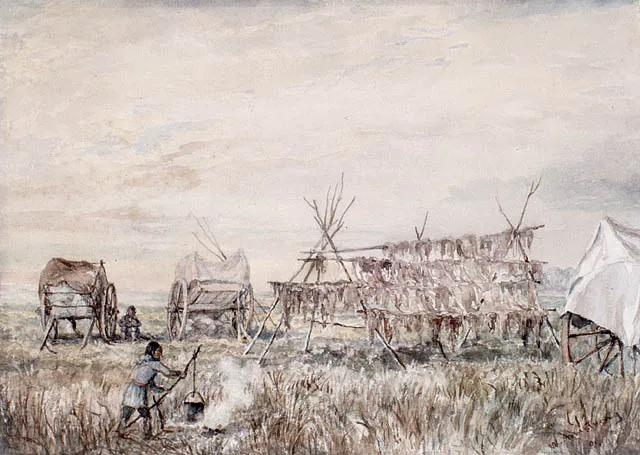
Photo: Armstrong, William, 1822-1914, Public domain, via Wikimedia Commons
Somewhere in the journals of Meriwether Lewis, between meticulous notes about river bends and unfamiliar bird species, there's a quiet acknowledgment that the Corps of Discovery probably wouldn't have made it without the food they got from Native traders along the way. That food wasn't hardtack. It wasn't salt pork. It was pemmican — and if you've never heard of it, that's one of the stranger gaps in American food history.
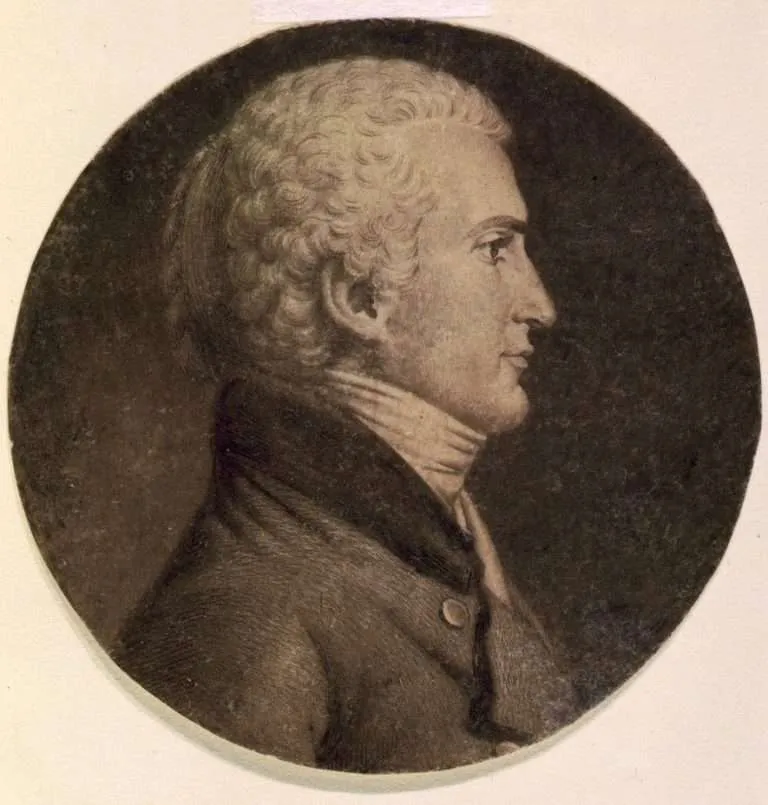 Photo: Meriwether Lewis, via encyclopediavirginia.org
What Exactly Is Pemmican?
At its most basic, pemmican is a compact mixture of dried, pulverized meat and rendered animal fat, often combined with dried berries like chokecherries or Saskatoon berries. But describing it that way is a little like calling a sourdough starter "flour and water." The technique behind it is what makes pemmican remarkable.
Indigenous peoples across the northern Great Plains — the Cree, the Blackfoot, the Métis, and dozens of other nations — had been refining pemmican for centuries before European contact. The meat, typically bison, was sliced thin and dried in the sun or over a low fire until it could be powdered by hand or with stones. The fat — specifically the hard kidney fat called tallow, not the softer outer fat — was rendered slowly and kept pure. When the two were combined at roughly a one-to-one ratio by weight and pressed into cakes or packed into rawhide bags called parfleches, the result was something almost miraculous: a food that could last months, sometimes years, without spoiling.
The berries weren't just flavor. They added a small but meaningful dose of vitamin C and antioxidants, which helped prevent scurvy on long journeys where fresh food was nowhere in sight.
The Fuel Behind the Fur Trade
By the early 1800s, pemmican had become the operational backbone of the North American fur trade. The Hudson's Bay Company and the North West Company essentially ran on it. Canoe brigades paddling across thousands of miles of Canadian wilderness couldn't carry heavy food supplies, and they needed something calorie-dense enough to sustain brutal physical labor through cold, wet conditions. Pemmican fit the bill so perfectly that it became a trading commodity in its own right — so valuable, in fact, that a conflict over its supply in 1816 contributed to what historians call the Pemmican War, a violent dispute in the Red River Colony that left twenty-one people dead.
 Photo: Hudson's Bay Company, via 4.bp.blogspot.com
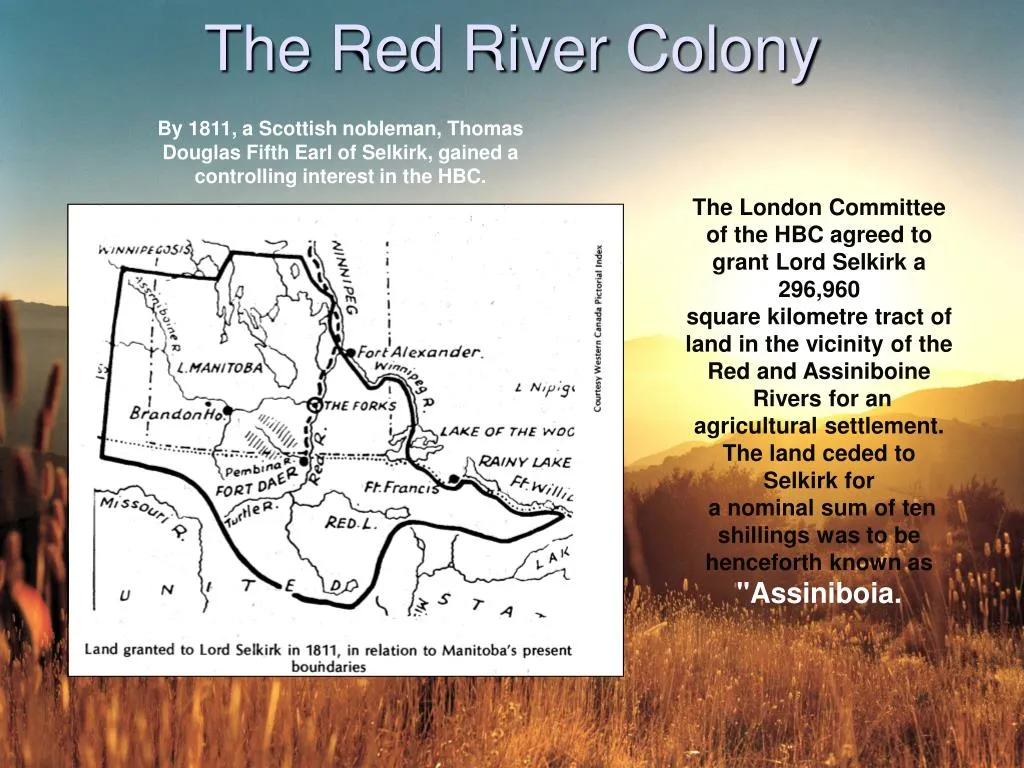 Photo: Red River Colony, via image3.slideserve.com
Lewis and Clark's expedition relied heavily on pemmican obtained through trade with Plains tribes. Polar explorers, including members of Arctic expeditions in the late 1800s, carried it as standard rations. The British military studied it. Scientists analyzed it. Everyone who actually tested it under extreme conditions came away impressed.
The Nutrition Science Nobody Studied (Because They Didn't Need To)
Here's the part that genuinely surprises people: pemmican is nutritionally complete enough to sustain a person indefinitely. That's not marketing language — multiple historical accounts describe individuals living exclusively on pemmican for extended periods without nutritional deficiency. The fat provides sustained energy. The protein supports muscle repair. The combination of saturated fat and protein creates what modern researchers would recognize as a highly satiating macronutrient profile — the kind that keeps hunger at bay for hours without a blood sugar spike.
A single pound of pemmican delivers somewhere between 2,500 and 3,500 calories, depending on preparation. Compare that to a commercial energy bar, which might give you 200–250 calories and a list of ingredients that reads like a chemistry exam. Pemmican has three ingredients. Sometimes four.
The fat-to-protein ratio also means it stores exceptionally well. Without water content and with fat acting as a natural preservative, properly made pemmican keeps at room temperature for months and in cool, dry conditions for years. Refrigeration is optional. A pantry shelf works fine.
The Quiet Revival
Pemmican never fully disappeared. You can find it in specialty outdoor stores, usually in small foil packets marketed to hunters and ultralight backpackers. But a more interesting revival is happening outside commercial channels, in hunting communities and among people drawn to ancestral or nose-to-tail eating philosophies.
Backcountry hunters who process their own elk or deer have started making pemmican the way it was always made — by hand, with rendered fat from the animal itself. Some add dried wild berries gathered in season. Others stick to the pure meat-and-fat formula. The appeal isn't nostalgia exactly. It's practicality. When you're ten miles into the backcountry and need something that won't freeze solid, weigh down your pack, or require cooking, pemmican solves every problem at once.
Small producers have also started showing up at farmers markets and online, selling versions made from grass-fed beef or bison. The ancestral diet community — people interested in how pre-industrial humans actually ate — has embraced it as a kind of nutritional proof of concept: that Indigenous food science, developed over generations of real-world testing in genuinely harsh conditions, worked better than most modern convenience food.
Why It Matters Beyond the Trail
There's something worth sitting with here. Pemmican is a technology. It's a solution to a specific problem — how do you feed people who are moving through a landscape with no infrastructure, no refrigeration, and no guarantee of the next meal? — and it was solved elegantly, with zero laboratory equipment, by people who needed it to actually work.
The fact that it got largely written out of American food culture, replaced by products engineered in facilities and sold with celebrity endorsements, says more about marketing than it does about nutrition. The Corps of Discovery didn't finish their journey because of hardtack. They finished it because of knowledge that wasn't theirs — knowledge that Indigenous communities had spent centuries developing and were generous enough to share.
That seems worth remembering the next time you reach for a wrapper with a mountain on it.